The Day I Ended My Seven-Year Marriage
The day I ended my seven-year marriage, I transferred $150 million into my wife’s account and told her, “Consider this your divorce settlement. I want you out of my life.” I thought money could make the separation clean, final, painless. Three years later, one photograph of two little children would make me realize that the day I sent Claire away, I hadn’t just lost my wife—I had unknowingly abandoned my own children.
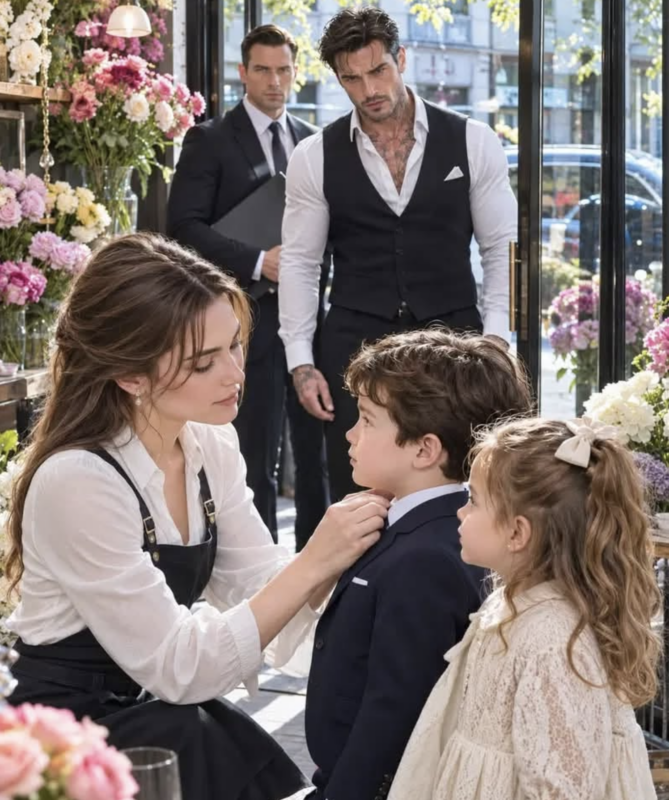
My name is Alexandre Moreau, and for years, I was one of Paris’s most powerful billionaires. I accumulated my wealth through property development, investment firms, hotels, and transportation companies. Others described me as merciless since I seldom lost a negotiation and refused to let emotion affect business decisions. But Claire had never been like the others.
For seven years, she was the only person who could make me forget about everything outside our home.
“You’re enough for me, chérie,” I told her.
What I had concealed from Claire was that I had never genuinely wished for children with her. So while she endured years holding herself responsible, I secretly ensured a pregnancy would remain improbable. Then Sophie Reynaud reappeared in my world. She had been my first love from childhood, and being around her revived emotions I thought had faded years earlier.
I transferred $150 million into Claire’s account and sent the note before doubt could stop me.
“Claire, that’s more than enough compensation for seven years of marriage. I want a divorce.”
Later, while traveling through Paris with Sophie, I adjusted her coat around her shoulders and swept the hair away from her face. Later that evening, I returned home with the divorce papers.
“Sign them.”
“Did you ever love me?”
“I gave you a good life.”
“Except the truth.”
“I knew how badly you wanted children. But I made sure it wouldn’t happen.”
“What?”
“I didn’t want a child tying us together if the marriage ended.”
Claire signed the documents.
“You’ll need that money,” I told her.
“I’d rather start over with nothing than live on the price you put on our marriage.”
“Remember this day, Alexandre. One day, you’re going to regret it for the rest of your life.”
For three years, I made no attempt to find her.
“Find Claire.”
Several hours later, he came back.
“She owns a small flower shop now.”
“Is she married?”
“No.”
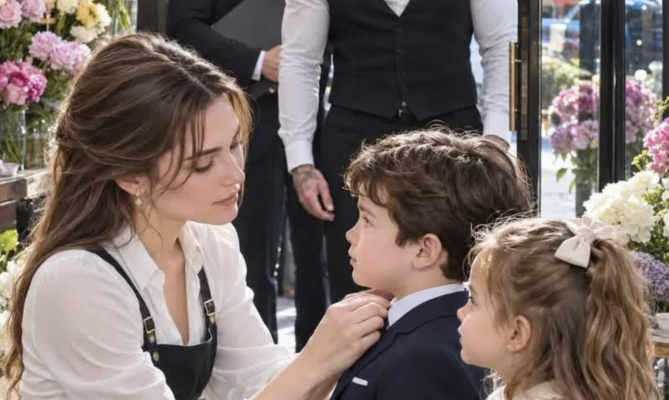
Claire was outside the flower store accompanied by two young children.
“How old are they?”
“About two.”
Three years had passed since Claire departed. I recalled Claire repeatedly resting a hand over her stomach. I remembered how she had looked at me, as though she had something to reveal before I told her I had intentionally obstructed her chances of pregnancy.
“Where is the flower shop?”
For three years, I had presumed Claire’s warning was nothing more than anger. And when my car at last stopped outside her flower shop, I saw Claire through the window. And for the first time in my life, I was afraid that all the money in the world would not be enough to bring my family back.
—
## Part 2: The Children Behind the Glass
The flower shop stood beneath a weathered green canopy, its windows crowded with roses, lilies, wildflowers, and little handwritten notes fastened to glass containers. Behind that glass, Claire was arranging pale daisies in a ceramic vase. The little boy sat on a wooden seat beside the counter, carefully sorting the ribbons by color. The girl stood beside Claire, holding a violet blossom in both hands.
She was wearing a sunny yellow sweater, and two dark ringlets framed her rounded cheeks. The boy was the first to raise his head. For three years, I had persuaded myself that our marriage had concluded without loose ends. Claire looked up.
“Alexandre.”
It was the name of a door that had been locked for years and had all at once opened uninvited. The twins turned toward me. The boy moved closer to Claire’s side. The scent of roses and damp soil filled my lungs, but beneath it I could smell the recognizable lavender soap Claire had used when we were married.
For one disorienting second, I saw her in our old apartment, standing barefoot on the tile while sunlight touched her shoulders.
“What are you doing here?” she asked.
“I need to talk to you.”
“You should have called.”
“If I had called, would you have answered?”
“No.”
“How old are they?” I asked.
Claire’s expression closed.
“Alexandre, you need to leave.”
“Claire.”
“Now.”
“Mommy, who is he?”
“He’s someone who used to know me.”
The child looked from Claire to me.
“Is he a customer?”
“No,” Claire said.
The little boy, still standing behind her, asked, “Why does he look like Léo?”
“Claire,” I said, barely recognizing my own voice, “are they my children?”
Claire looked at me for years.
“Yes.”
“Do you know Mommy?”
“I do,” I said.
“I knew her a long time ago.”
“You knew more than that.”
“How old are they?”
“Two years and four months.”
They had been born while I was signing acquisitions, attending charity galas, and sitting across from Sophie in restaurants where everyone already knew my name. They had taken their first breaths while I had been living as though nothing essential had changed.
“Why didn’t you tell me?” I asked.
Claire laughed once, but there was no humor in it.
“You came here to ask me that?”
“I have a right to know.”
“You had a right to know three years ago.”
“I didn’t know.”
“No,” she said. “You didn’t.”
I had never considered that she might already be carrying the two lives I had spent years claiming I wished to protect.
“Were you pregnant when I left?” I asked.
Claire looked elsewhere. Lily wandered toward a bucket of sunflowers, while Léo kept watching me with guarded attention.
“Yes.”
“How far along?”
“Almost nine weeks.”
The twins had already existed when I told Claire I had made sure she could never become pregnant. They had existed while I stood beside Sophie and imagined a future built on the ruins of my marriage.
“Why didn’t you say anything?” I murmured.
“Because you had already told me what you believed.”
“I never knew about the babies.”
“You knew I wanted children.”
“That’s not the same thing.”
“No, it isn’t.”
She came around the counter, placing herself between me and the twins.
“When I found out, I tried to tell you.”
“You tried?”
“I sent you a message.”
“I never received one.”
“I know.”
“What did it say?”
Claire’s eyes moved toward the window.
“I told you I was pregnant.”
“You should have called me.”
“I did.”
“When?”
“The morning before you came home with the divorce papers.”
“I don’t remember.”
“I left two messages.”
“I never heard them.”
“I know that too.”
Sophie had called me before my first meeting. My assistant had told me Claire had been trying to reach me, but I had asked him to silence my phone until the later part of the day.
“What did you say in the messages?” I asked.
“I said I had something important to tell you, and that I wanted to speak face-to-face.”
“That could have been anything.”
“You’re right.”
“Why didn’t you tell me directly when I came home?”
“I tried.”
Claire had been standing near the bedroom window, one hand resting over her stomach. Then I had confessed that I had secretly prevented pregnancy since I did not want a child tying us together.
“I didn’t know,” I said.
“You knew enough to hurt me.”
Lily had picked up a sunflower and was showing it to Léo. He ignored the flower, still studying me as though he were trying to solve a challenging puzzle.
“Do they know who I am?”
“No.”
“Why not?”
“Because I didn’t want them to grow up believing their father abandoned them.”
“I never told them you left because you didn’t want them.”
“I didn’t know they existed.”
“That distinction belongs to adults.”
“To them, you were simply someone who was not part of our lives.”
“You protected me?”
“I protected them.”
“From what?”
“From becoming angry at a man they had never met.”
Claire watched me with a sad smile.
“They ask questions sometimes,” she said.
“What questions?”
“They ask why other children have fathers who come to school.”
“What do you tell them?”
“That families can look different.”
“Do they know my name?”
“No.”
“Then what did Lily mean when she asked if I knew you?”
“She has seen your picture.”
“Where?”
“In an old box.”
“What kind of box?”
“Things from our marriage.”
“Why keep a picture of me?”
“Because I wanted them to know that you were once a real person, not a villain from a story.”
“Who is he?” she asked.
“My aunt,” Claire said.
The woman looked from Claire to me, then to the children.
“So he finally came.”
“Aunt Marguerite.”
“I thought you said he didn’t know.”
“He didn’t.”
“Then why is he here?”
“I found out about the children.”
“You found out?”
“I saw a photograph,” I said.
“And now you want to see them?”
“I want to understand what happened.”
“You had seven years to understand your wife.”
“Aunt Marguerite, please.”
“No, Claire.”
“You gave her money as if she were a stranger you had inconvenienced.”
“I know.”
“Do you?”
“I’m beginning to.”
“That is not the same as knowing.”
She sounded like someone who had watched Claire rebuild herself piece by piece and did not trust me to touch anything without breaking it.
“You’re right.”
“Do you like flowers?” she asked.
“I do.”
“What is your favorite?”
“White roses,” I said.
“That was my favorite,” Lily replied.
“Then we have the same favorite.”
Léo at once moved between us.
“Mommy says we don’t talk to strangers.”
“I’m not a stranger,” Lily protested.
Claire gently touched Léo’s shoulder.
“We should go into the back room for a moment.”
“Please,” I said.
“I’m not asking to take them away.”
“You don’t get to ask for anything yet.”
“I know.”
“I mean it, Alexandre.”
“I know.”
She looked at me with an exhaustion that seemed older than three years.
“You need to leave.”
Before turning away, I regarded the twins. Léo had placed one hand in Claire’s.
“I’m sorry,” I said.
“So am I,” she replied.
I stayed on the pavement, staring through the window as Claire guided the twins toward the back room. Lily looked over her shoulder at me. I came back to the car, but I did not tell the driver to move.
“Find a family-law attorney,” I said.
“Sir?”
“Not to take them from her.”
“I didn’t assume—”
“And find every message, call, and document connected to Claire from the months before our divorce.”
“Why?”
“Because she says she tried to tell me.”
“What is it?” I asked.
“Nothing.”
“Tell me.”
“There may have been a message.”
“What kind of message?”
“I don’t know.”
“You just said there may have been one.”
“Three years ago, Claire’s number appeared on your office system.”
“What did you do?”
“I screened your calls.”
“Why?”
“You were preparing for the announcement about Sophie.”
“You knew she had called?”
“She called several times.”
“Why didn’t you put her through?”
“I believed she was trying to stop the divorce.”
“She was my wife.”
“I thought you had made your decision.”
“What else?”
“There was an email.”
“Where is it?”
“I don’t know.”
“You don’t know?”
“It may have been archived.”
“Find it.”
As the car pulled away from the flower shop, I looked back through the rear window. My children were inside that shop, encircled by flowers and the love of a mother who had raised them without me. I had presumed Claire had hidden them from me.
“What is it?” I demanded.
“We found an archived file.”
“What does it say?”
“It was sent from Claire’s account two days before the divorce.”
“Open it.”
Beneath it were six words that made my world fall silent around me. *Please tell Alexandre he is going to be a father.*
—
## Part 3: The Truth Between the Messages
“Please tell Alexandre he is going to be a father.”
Claire had known.
“Print everything,” I said.
“Every message, every attachment, every access record.”
“And call the attorney.”
“Tonight?”
“Tonight.”
The car turned toward my office instead of my apartment. I was unable to return home and sit among the furniture Claire had once chosen while the truth waited inside an archived file. Yet one sentence on a phone screen had made everything I had known feel like a structure built on ground that had in a low voice shifted beneath it.
Daniel led me into the records room, where old communications were stored on a secure server. The email had been sent three days before the divorce. It had been moved into an archive folder less than ten minutes after it arrived.
“Who accessed it?” I asked.
“The record shows your assistant account.”
“You were the only person using it.”
“Yes.”
“Did you archive it?”
“I don’t remember.”
“That is not an answer.”
“I know.”
This one had been sent the morning of the divorce.
The subject line read, “Please come home before you decide.”
“I need to tell you something about the baby.”
“Who installed that?” I asked.
“Daniel.”
“You asked me to stop all calls from Claire.”
“When?”
“The week before the divorce.”
“I asked you to stop unnecessary calls.”
“You said you didn’t want to be drawn into another argument.”
“I did not tell you to hide a pregnancy from me.”
“You didn’t know she was pregnant.”
“Neither did you.”
“No,” he said in a low voice.
She was in her early fifties, composed and silver-haired, with the steady expression of someone accustomed to listening to people say things they wished they could take back.
“Monsieur Moreau,” she said.
“Marianne Cole?”
“Yes.”
She had been recommended by one of my directors as a family-law attorney who valued cautious agreements over theatrical courtroom battles.
“Tell me what I can do,” I said.
“First, you can stop assuming that money will solve the problem.”
“I understand.”
“Do you?”
“I have two children I did not know existed.”
“You have two children whose mother has raised them without you.”
Two lives that had already been present while I shifted away.
“I want to establish paternity,” I said.
“Do you want legal confirmation, or do you want to begin building a relationship with them?”
“Both.”
“Those are not the same process.”
“I know.”
“Do you?”
“I don’t know much anymore.”
“Then begin with the least disruptive step.”
“What is that?”
“Ask Claire whether she is willing to arrange a private paternity test.”
“She may refuse.”
“She has every right to be cautious.”
“I am their father.”
“You believe you are.”
The distinction was challenging to hear, but I agreed to it.
“Once the test confirms it, what happens?”
“Nothing happens automatically.”
“Nothing?”
“You do not walk into their lives because a laboratory confirms biology.”
“I am not trying to take them from Claire.”
“Good.”
“I want to help.”
“Then offer help without attaching conditions.”
“I can provide anything they need.”
Marianne closed the folder.
“Be careful.”
“With what?”
“With the difference between providing and controlling.”
For once, the emptiness did not feel peaceful. At four in the morning, I opened the image Daniel had found. Claire stood outside the flower shop with Léo and Lily pressed against her sides. I studied the photograph until dawn, searching for clues about what they loved, what frightened them, and what kind of father they might someday believe I had been. The following afternoon, I came back to the flower shop.
Before entering, I stood beneath the faded awning and watched Claire through the window. Lily sat on the counter, swinging her legs while holding a paper cup of crayons. Léo observed a moment later and at once moved closer to his mother. Claire turned toward the door.
“You should have called.”
“I thought you might not answer.”
“That does not make appearing here acceptable.”
“I’m sorry.”
“I brought something for them.”
“What is it?”
“Books.”
“Why?”
“Because I didn’t know what else to bring.”
“You could have brought nothing.”
“I know.”
“Are you here about the messages?”
“Yes.”
“Did you find them?”
“I did.”
“Then you know I tried to tell you.”
“I know.”
“Good,” she said.
“Claire, I want to ask for a paternity test.”
“I’m not asking to disrupt their lives.”
“You already have.”
“I know.”
“You came into the shop and asked if they were yours in front of them.”
“I know.”
“You frightened Léo.”
“I’m sorry.”
“You keep saying that.”
“Because I keep discovering new reasons to say it.”
She looked away toward the children. Léo had abandoned his coat and was watching us with care.
“I will consider the test,” Claire said.
“Thank you.”
“That is not consent.”
“I understand.”
“You need to understand something else.”
“What?”
“The children are not proof that you have been given a second chance with me.”
“I’m not asking for one.”
“You may think you aren’t.”
“You are looking at them and seeing a family you lost.”
“I am looking at them and realizing they are people I never knew.”
“Then remember that.”
“I will.”
“If the test confirms they are yours, you will not suddenly become entitled to every part of their lives.”
“I won’t.”
“You will not send gifts without asking.”
“I won’t.”
“You will not appear at school or take them anywhere.”
“I won’t.”
“And you will not use your wealth to make me feel incapable of caring for them.”
“I won’t.”
“Why should I believe you?”
“You shouldn’t yet.”
For once, Claire’s shoulders lowered slightly.
“Mommy,” Lily said, “is he coming inside?”
Claire looked down at her.
“Not today.”
“Why?”
“Because we have work to do.”
Lily looked at me.
“Do you work?”
“Yes.”
“What do you do?”
“I own some companies.”
“What kind?”
“Buildings, hotels, and transportation.”
“Do you own buses?”
“Some.”
“Do you own flowers?”
“No.”
Claire’s mouth moved faintly.
“Flowers are harder to keep alive than buildings,” she said.
“I’m beginning to understand that.”
Léo came closer, though he stayed within reach of Claire’s hand.
“Are you the man from yesterday?”
“Yes.”
“Why do you keep coming here?”
“Because I would like to know you.”
“Do you know my name?”
“Your name is Léo.”
“And hers?”
“Lily.”
“He remembered.”
“Mommy says remembering names is polite.”
“Your mother is right.”
“Is she your mommy?”
Claire closed her eyes briefly.
“No,” I said.
“She used to be my wife.”
Léo looked at Claire.
“What is a wife?”
“Someone you marry,” Claire explained.
“Did you marry him?”
“Yes.”
“Do you still?”
“No.”
“Why?”
Instead, I said, “Because I did not know how to be honest.”
“Are you honest now?”
“I’m trying to be.”
Claire placed a hand on his shoulder.
“That is enough for today.”
“Thank you for letting me speak with them.”
“I didn’t invite you.”
“No.”
“Then do not mistake permission to stand here for permission to stay.”
“I won’t.”
I left the bag of books on the counter and stepped back onto the sidewalk. Léo did not wave, but he stayed near the window until I reached the corner. The paternity test took place two days later in a private medical office. She brought the twins through a side entrance to avoid attention, though no reporters had been told anything and no one was waiting outside.
Claire now chose doors that kept her children safe from unnecessary eyes. Léo sat in a chair beside her, swinging his legs. Lily held a stuffed rabbit with one ear bent permanently forward. Yet when the cotton touched Lily’s mouth, I sensed an ache so deep that I had to look away.
“Are you scared?” she asked.
“A little.”
“Of the test?”
“Of what it might say.”
“I know what it will say.”
“What?”
“That you are Alexandre.”
“Why do you think that?”
“Because Mommy said your name.”
Claire turned toward the window. Léo watched us with suspicion.
“Mommy,” he said, “is he staying?”
“No.”
“Is he coming back?”
“If your mother allows it,” I said.
Léo looked at me.
“Why does she decide?”
“Because she has taken care of you every day.”
“Will you take care of us?”
“Yes,” I said.
“How?”
“I don’t know yet.”
“That is not an answer.”
“No,” I said. “It isn’t.”
“But I will learn.”
The results arrived six days later. Marianne called me to her office. I settled across from her with the sealed packet unopened between us.
“You can open it here,” she said.
“I already know.”
“You do not.”
“I know enough.”
She slid the sealed packet toward me. The probability of paternity was greater than 99.99 percent.
“What happens now?”
“Now you decide what kind of father you intend to be.”
“I want to see them.”
“You have seen them.”
“I want regular contact.”
“That will depend on Claire.”
“What if she refuses?”
“Then you may petition the court.”
“I don’t want to make this adversarial.”
“Then do not begin by threatening legal action.”
“I would never threaten her.”
“Your resources can feel like a threat even when you speak calmly.”
“What should I offer?”
“Consistency.”
“How?”
“Small, predictable arrangements.”
“Such as?”
“An hour with you at the shop, if Claire agrees.”
“That is all?”
“It may be all they can handle.”
I left Marianne’s office carrying the report in a plain envelope. On the way to the flower shop, I stopped at a bookstore. Instead, I bought a book about trains since Léo had once told me that he liked buses, and a book about birds since Lily had spent ten minutes admiring a sparrow outside the medical office. When I reached, Claire was closing the shop.
She looked at the sealed packet in my hand.
“It’s confirmed,” I said.
“I know.”
“You knew before I did?”
“The doctor called me.”
The laboratory had sent her the results first.
“I am their father.”
“Yes.”
“May I see them?”
“They are upstairs with Aunt Marguerite.”
“Would you allow me to spend an hour with them tomorrow?”
Claire looked at me for years.
“Here?”
“Here.”
“With you present?”
“If that makes you comfortable.”
“It does.”
“I understand.”
“Tomorrow at ten.”
“Thank you.”
“Do not be late.”
“I won’t.”
“And do not bring expensive gifts.”
“I brought books.”
“Books are acceptable.”
Then Claire said, “There is something else.”
“What?”
“Sophie came by yesterday.”
“Why?”
“She said she wanted to speak with me.”
“Did she?”
“She asked whether I intended to use the children to punish you.”
“Did you?”
“No.”
“I know.”
“Do you?”
“I am beginning to.”
Claire’s gaze moved toward the stairs.
“Sophie knew about the pregnancy.”
“What?”
“She knew.”
“How?”
“I sent her a message.”
“Why would you contact her?”
“Because she was with you the day I saw you.”
“I thought she might tell you.”
“What did you write?”
“That I was pregnant and that I was frightened.”
“When?”
“Three days before you brought me the divorce papers.”
“What did she say?”
“She never answered.”
“That is not like her.”
Claire’s expression stayed calm, but something wounded moved beneath it.
“She came here yesterday and told me she had answered.”
“What did she say?”
“She said she told you I was trying to manipulate you.”
“She said you had already chosen her and that she believed I was attempting to create an obligation you did not want.”
“Why would she say that?”
“I don’t know.”
“You’re certain you sent the message?”
“I kept a copy.”
Claire reached beneath the counter and removed a little envelope. *Sophie, I am pregnant. Please tell him.* The same period during which Sophie had returned to my life and encouraged me to believe Claire was trying to hold me to a marriage I no longer wanted.
“Why didn’t you tell me this before?” I asked.
“Because I didn’t know whether it mattered.”
“It matters.”
“It may not change anything.”
“It changes everything.”
“No,” she said in a low voice. “The children still needed protection. You still have to earn their trust. And I still do not know whether you are here because you love them or because you cannot bear discovering that your choices had consequences.”
I thought of Léo watching me as though I were a stranger who might disappear. I thought of Lily holding my hand in the doctor’s office.
“I don’t know what I feel yet,” I acknowledged.
“But I know I am responsible for them,” I continued.
“That is a beginning.”
“I also know someone prevented me from learning the truth.”
“Yes.”
“Did Sophie intercept your message?”
“I don’t know.”
“Did she have access to my office?”
“I don’t know.”
“Did she speak to Daniel?”
“I don’t know.”
Claire slid the printed message toward me.
“I am not giving you this to create a war with her.”
“I know.”
“I am giving it to you because tomorrow you will meet the children as their father.”
“And you believe I should know what happened before I do?”
“I believe you should stop building your decisions on incomplete truths.”
By morning, I reached at ten exactly. Léo stood behind her holding a wooden bus. Lily carried the bent-eared rabbit.
“Are you staying for one hour?”
“If your mother says yes.”
Claire looked at the children, then at me.
“One hour,” she said.
For once, I crossed its threshold without being told to leave.
—
## Part 4: The Letters That Never Arrived
“You should ask Daniel who gave Sophie access to your private account.”
The message stayed on my screen while the flower shop appeared to grow quieter around me. Inside, Lily was arranging wooden blocks into a crooked tower, and Léo was showing Claire the wheels on his toy bus.
“What happened?” she asked.
“Who sent it?”
“I don’t know.”
“Did you ask Daniel?”
“Not yet.”
The twins were close enough to hear us, so I lowered my voice.
“Do you know how Sophie could have accessed my private account?”
“She may not have needed direct access,” Claire said.
“What does that mean?”
“She was often at your office.”
“So were dozens of people.”
“Not in your private rooms.”
“Did you see her there?”
“Once.”
“When?”
“The day I sent her the message.”
“You were at my office?”
“I went there because I had tried calling you and Daniel kept saying you were unavailable.”
“You never told me.”
“You were standing across the street with Sophie.”
That afternoon, I had left a meeting early and found Sophie waiting near the entrance of a restaurant. She had told me Claire was becoming unstable and that she feared Claire would use a pregnancy to prevent our divorce. I had never observed whether Claire had been across the street.
“You saw Sophie enter the building?” I asked.
“Yes.”
“Where was I?”
“In the restaurant with her.”
“What did Sophie do?”
“She went inside through the side entrance.”
“Did you follow her?”
“No.”
“Why not?”
“Because I had already understood that I was no longer welcome in your life.”
Claire had experienced it as the final confirmation that she had lost me.
“Why didn’t you tell me she went into the office?” I asked.
“Because you had already made your decision.”
“I had not yet signed the papers.”
“You had transferred the money.”
Before I had given Claire any chance to tell me about the children. I had created a future without her and then acted surprised when she stopped trying to enter it.
“Alexandre, can you build it?”
“I can try.”
Léo watched from the other side of the table. He still did not trust me enough to ask for help, but he no longer moved away whenever I came near. I helped Lily rebuild the tower, placing each block with care beneath the next.
“Claire,” I responded softly, “I need to speak with Daniel.”
“Then speak with him.”
“Will you be here tomorrow?”
“Yes.”
“I would like to come back.”
“You may come for the children.”
“I understand.”
“Not for me.”
“I understand that too.”
“You keep saying that.”
“I’m trying to.”
The corner of her mouth moved, but the expression was too tired to become a smile.
“Trying is not the same as understanding.”
“I know.”
This time, she looked away first. I left the shop an hour later, carrying no photographs, no drawings, and no promise that Claire would ever forgive me. But as I reached the car, Lily’s voice followed me through the open door.
“Come back tomorrow, Alexandre!”
He answered on the first ring.
“Sir?”
“Where are you?”
“At the office.”
“Stay there.”
“Is something wrong?”
“I need to ask you about Sophie.”
“I see.”
“Do you?”
“I’ll be in the records room.”
Daniel was standing beside the identical monitor where we had found Claire’s archived email.
“You knew I was coming,” I said.
“Yes.”
“Who gave Sophie access to my private account?”
Daniel took a slow breath.
“Your executive assistant account was not private in the way you believed.”
“I’m listening.”
“When you hired me, you gave me administrative access to your calendar, email, phone filters, and document archive.”
“I know.”
“Sophie was added as a temporary authorized user.”
“By whom?”
“By me.”
“Why?”
“She needed access to your schedule.”
“Why would she need that?”
“She said you asked her to coordinate personal matters while the divorce was being prepared.”
“I never asked her.”
“I thought you had.”
“You thought?”
Daniel looked down.
“She told me you wanted the process kept discreet.”
“Discreet from whom?”
“From the board, the press, and Claire.”
“You allowed a woman who was not my wife to access my private communications.”
“I believed I was following your instructions.”
“You believed everything she told you.”
“At the time, she had been part of your life before Claire.”
“That does not answer my question.”
“No,” he said. “It does not.”
“Show me the access history.”
Daniel entered his credentials. Sophie had accessed my account six times during the month before the divorce. The first entry was the day she returned to Paris. The last was the morning Claire’s email had arrived.
“Did she read this?” I asked, pointing to the ultrasound message.
“The system records that the message was opened by an authorized session.”
“When?”
“Eight minutes after it arrived.”
“Which session?”
Daniel looked at the display.
“Sophie’s.”
“She opened the email.”
“Yes.”
“What did she do?”
“She downloaded the attachment.”
A future Claire had tried to place in my hands.
“Did she delete the email?”
“No.”
“Then why didn’t I see it?”
“She moved it into an archive folder.”
“Why?”
“I don’t know.”
“Did she tell you?”
Daniel closed his eyes briefly.
“She told me Claire was attempting to manipulate you.”
“That is not an explanation.”
“She said the image might not be genuine.”
“Did you believe her?”
“I believed you did not want children.”
I had spent years making certain that everyone around me comprehended I did not want children. When Sophie showed Daniel the ultrasound, she did not need to invent a fear.
“What else did she access?” I asked.
Daniel opened another file.
“Your private phone records.”
“Claire’s calls?”
“Yes.”
“The messages?”
“Yes.”
“Everything?”
“Everything that came through the office synchronization service.”
“Did she see the messages Claire sent after the divorce?”
“No.”
“Only the ones before?”
“As far as I know.”
“Did she intercept the letters?”
“What letters?”
“Daniel.”
“There were physical letters.”
“From Claire?”
“Yes.”
“How many?”
“Two that I remember.”
“When?”
“After she left.”
“How long after?”
“The first arrived about three weeks later.”
“And the second?”
“Several months after that.”
“Why did I never see them?”
“Where are they?”
“I don’t know.”
“You do.”
“I placed them in the outgoing correspondence file.”
“Why?”
“I thought they were personal matters you had chosen not to address.”
“I never saw them.”
“I know.”
“Then what happened?”
“I gave them to Sophie.”
For a few seconds, I heard nothing but the faint hum of the ventilation system.
“You gave my wife’s letters to Sophie.”
“I believed she was helping you move forward.”
“You believed she had the right to decide what I was allowed to read?”
“No.”
“Then why?”
“Because you were preparing to marry her.”
“I was not engaged.”
“You had spoken about it.”
“I had spoken about a future.”
“And Sophie said Claire was trying to pull you back into the marriage.”
“She was my wife.”
“She was your former wife.”
“Not when the first letter arrived.”
I saw the truth then, not as a single act of betrayal, but as a chain of little decisions made by people who believed they were protecting me from discomfort. Sophie had opened her email. Daniel had handed over her letters.
“Did Sophie read the letters?” I asked.
“I don’t know.”
“Did she keep them?”
“I don’t know.”
“Where did you give them to her?”
“Her apartment.”
“You drove them to her?”
“Yes.”
“Why didn’t you destroy them?”
“I would never destroy personal correspondence.”
“Yet you removed it from my office.”
“Yes.”
“Did she ask you to?”
“She said you had asked her to handle anything that might upset you.”
“I never said that.”
“I know.”
“When did you realize?”
“After you divorced Claire.”
“That took you three years?”
“No.”
“When?”
“The day you asked me to find her.”
“What did you discover?”
“That she had never married.”
“Go on.”
“That she still lived in Paris.”
“That is not proof of anything.”
“No.”
“What else?”
“She had sent inquiries to your office.”
“What kind of inquiries?”
“She asked whether you were well.”
“Why didn’t you tell me?”
“I thought you would not want to know.”
“Anything else?”
“She asked whether you had married Sophie.”
“And what did you tell her?”
“That you were happy.”
“Was I?”
Daniel looked at me.
“I don’t know.”
For three years I had been calling my life peaceful since it was free of conflict.
“Call Sophie,” I said.
“Now?”
“Now.”
He left a brief message asking her to come to the office. Sophie entered wearing a cream-colored coat, her dark hair pinned neatly at the nape of her neck. She looked exactly as she had on the day I had chosen her. Yet something in her face changed when she saw Daniel standing beside the monitor.
“You found them.”
“You knew I would eventually find out?”
“I hoped you would ask me first.”
“I asked you three years ago whether Claire had contacted you.”
“You asked whether she had tried to interfere.”
“That was not what I asked.”
Sophie removed her gloves and placed them carefully in one hand.
“I told you what I believed.”
“You told me Claire was manipulating me.”
“She had spent years trying to have a child with you.”
“She was pregnant.”
“I did not know that.”
“You saw the ultrasound.”
“I saw an image,” she said.
“You opened her email.”
“She sent it to me too.”
“Why?”
“Because she knew you were with me.”
“She asked you to tell me.”
“She asked me to choose between you.”
“No,” I said. “She asked you to tell me I was going to be a father.”
Sophie’s gaze moved toward the floor.
“She wanted a reason to keep you.”
“She was my wife.”
“You had already decided to leave.”
“I had decided to leave because I believed she no longer trusted me.”
“She didn’t.”
“Because you told her I had chosen you.”
Sophie looked at me then.
“Hadn’t you?”
“Yes,” I said.
“You see?”
“I chose you.”
“Then what did I do wrong?”
“You made sure I never knew about my children.”
“I protected the decision you had already made.”
“You had no right.”
“Neither did Claire.”
“She had every right to tell me.”
“She did tell you.”
“Through you.”
“You had stopped listening to her.”
Sophie’s words found the one place in me that still resisted blame. I had wanted Claire to leave with dignity so I would not have to witness the damage I had caused. I had wanted Sophie without the inconvenience of explaining how I had betrayed my marriage.
“Where are the letters?” I asked.
“I don’t have them.”
“Daniel gave them to you.”
“He gave me envelopes.”
“Where are they?”
“I threw them away.”
“What did they say?”
“I did not read them.”
“Then why did you throw them away?”
“Because I believed they were another attempt to draw you back.”
“You did read them.”
“I read the first.”
“What did it say?”
“Tell me.”
“It said Claire was sorry for leaving without saying goodbye.”
“What else?”
“She said she had found a small apartment and was trying to start over.”
“Was she pregnant?”
“She did not say that.”
“And the second letter?”
“I do not remember.”
“You remember the first.”
“The second was longer.”
“What did it say?”
“She said you had a right to know something.”
“What something?”
Sophie closed her eyes.
“I don’t know.”
“You do.”
“She said she had sent you a message.”
“About the pregnancy?”
“I assume so.”
“You assume?”
“She did not use the word.”
“Why didn’t you give me the letter?”
“Because I thought you would run back to her.”
“You knew she was carrying my children.”
“I suspected.”
“You suspected and kept silent.”
“You had already chosen me.”
“I had chosen you because you kept me ignorant.”
Sophie’s eyes filled with tears, but I was unable to move toward her.
“I loved you,” she said.
“Perhaps.”
“You cannot say that as if it means nothing.”
“It means something.”
“What?”
“That I let love become an excuse for cowardice.”
“I never meant to hurt the children,” she said.
“You made a decision that removed their father from their lives.”
“You had removed yourself.”
“I did not know they existed.”
“You knew Claire wanted them.”
Before Sophie left, I asked one final question.
“Where did you throw the letters?”
“Daniel’s apartment.”
“I kept them,” he admitted.
“Why?”
“Because I could not bring myself to destroy them.”
“Where are they?”
“In a locked drawer.”
“Take me there.”
Daniel lived in a modest apartment near the Marais, a place I had never visited despite knowing him for twelve years. When he opened it, two envelopes lay beneath a stack of receipts. The first was creased at the edges. The second had been opened and carefully resealed. I reached toward it, but Daniel stopped me.
“There is something you should know.”
“What?”
“The second letter contained an ultrasound image.”
“The same image?”
“I don’t know.”
“Where is it?”
“Not inside.”
“Then where?”
Daniel pulled a folded sheet of paper from beneath the envelopes.
“I removed the image,” he said.
“Why?”
“I thought Sophie would destroy it.”
“You gave it to her.”
“No.”
He looked at me with an expression I had never seen on his face before.
“I kept it.”
“Where?”
Two tiny forms rested within the dark curve of Claire’s womb. On the back, Claire had written a date.
“It was delivered to your house,” he said.
“Why was it never sent to me?”
“Because I did not know whether you wanted the truth.”
I took the sealed packet from his hand.
—
## Part 5: The Choice That Could Not Be Bought
I held Claire’s unopened letter in my hand while the rain moved softly against Daniel’s windows. For three years, I had presumed my silence had been chosen by Claire. Now I comprehended that silence had been built around both of us, piece by piece, by people who assumed they knew what would protect me.
Even if every message had reached me, even if every letter had been placed directly in my hands, I had still been the man who told Claire that a child would be an unwanted obligation.
“Take me to the flower shop,” I told Daniel.
He looked at the sealed packet.
“You should read it first.”
“I need to speak with her before I read another word.”
“Why?”
“Because if I open it here, I will only be listening to my own guilt.”
“I am sorry.”
“I know.”
“I should have told you.”
“Yes.”
“I should have given you the letters.”
“Yes.”
“I thought I was protecting your future.”
“You protected the future you wanted me to have.”
“I understand if you want me to resign,” he said.
“I will decide after I speak with Claire.”
“You still trust me enough to keep working?”
“I do not know what I trust anymore.”
He accepted the answer with a tired nod. I placed Claire’s letter inside my coat. It suggested that Claire had believed more than Sophie and Daniel were involved. A handwritten sign on the door announced that the shop was closed. Through the windowpane, I saw Claire standing behind the counter. Aunt Marguerite sat nearby, sorting receipts into neat piles. Claire looked up when I approached.
Her gaze moved to the sealed packet beneath my coat, and she at once comprehended.
“You found it,” she said when I went in.
“I found two letters.”
“Where?”
“Daniel kept them.”
“I wondered whether he had destroyed them.”
“He did not.”
“He told you?”
“He told me everything.”
Aunt Marguerite stopped sorting the receipts.
“Everything is a large word,” she said.
“No,” I responded.
“It is not large enough.”
“Where are the children?”
“Upstairs.”
“Are they asleep?”
“They were.”
The way she said it made me wonder whether they were sleeping now or whether she had sent them upstairs since she did not want them to witness another challenging conversation.
“I need to speak with you,” I said.
“You already are.”
“Not here.”
Claire turned toward the back room. Aunt Marguerite rose with a hushed effort and took her cane.
“I’ll sit with the twins,” she said.
“Aunt Marguerite—”
“You have carried this alone long enough.”
Marguerite walked past me toward the narrow staircase.
“Alexandre,” she said.
“Yes?”
“If you have come to demand something, leave now.”
“I have come to make a choice.”
“Those are not always different things.”
Claire waited until the floorboards stopped creaking.
“What choice?” she asked.
“I want to ask you something before I read your letter.”
“You do not have to read it at all.”
“I do.”
“Then read it.”
“I want to know whether you still intend to leave Paris.”
“Who told you?”
“No one.”
“You heard me speaking with Marguerite.”
“I heard enough.”
“Then you know this is not your decision.”
“I know.”
“Do you?”
“I am trying to.”
The glass reflected both of us, standing several feet apart beneath the shop’s warm lights.
“You found out about the children,” she said.
“I did.”
“You discovered that I tried to contact you.”
“I did.”
“You learned Sophie and Daniel kept information from you.”
“Yes.”
“And now you believe you can repair everything by appearing at my shop every morning?”
“No.”
“By bringing books?”
“No.”
“By telling me that you are sorry?”
“I am sorry.”
“That is the only honest thing you have said quickly.”
“I am not here to buy forgiveness.”
“You have always believed money was a way to make painful things manageable.”
“I know.”
“You paid me to leave.”
“I know.”
“You called it a settlement.”
“I know.”
“You thought if the number was large enough, you would never have to see what it cost.”
“I know.”
Claire turned toward me.
“I returned every dollar because I did not want the children raised under the shadow of that money.”
“I never meant for them to suffer.”
“You did not have to mean it.”
“I am trying to understand what you need now,” I said.
“What I need is not another promise from a man who once promised me everything while hiding the truth.”
“I am not asking you to believe me.”
“Then what are you asking?”
“For the chance to do something without controlling the result.”
“That sounds like a contradiction.”
“It may be.”
I removed the written letter from my coat and placed it on the counter between us.
“I will read this, but not tonight.”
“Why?”
“Because I want you to know that whatever it says, I will not use it to pressure you.”
Her eyes lowered to the sealed packet.
“What do you think it says?”
“I don’t know.”
“You have imagined it.”
“I have imagined every possibility.”
“Then you know it will not change the past.”
“No.”
“Nor will it make me trust you.”
“No.”
“Nor will it give you the right to decide where my children live.”
“I know.”
“An offer was made to me,” she said.
“To sell the shop?”
“Yes.”
“By whom?”
“A development company.”
“How much?”
“That is exactly what I mean.”
“I only asked.”
“You are already translating my life into a number.”
“I am trying to understand.”
“The shop is in a valuable location.”
“I know.”
“They want the building and the business.”
“Would you sell?”
“I have not decided.”
“Where would you go?”
“Normandy first, perhaps.”
“Normandy?”
“My cousin lives outside Rouen.”
“And after that?”
“I have another offer from a florist in Provence.”
“You would move there with the twins?”
“If I sell, yes.”
“Why?”
“Because I need to know that your money and your name cannot reach into every part of our lives.”
“I would never use either against you.”
“You already used money to end our marriage.”
“That was before I knew about them.”
“That is not the only reason I fear it.”
“I will not stop you from leaving.”
Claire watched me with care.
“You could.”
“Legally, perhaps.”
“With your wealth, certainly.”
“I could challenge the move.”
“You could make the process unbearable.”
“I could.”
“Léo and Lily are your children as much as they are mine.”
“They are not property.”
“I know.”
“They are not a prize you discovered.”
“I know.”
“They are not a way to punish Sophie or repair your pride.”
“I know.”
“Then what are they?”
I thought of Lily’s little hand reaching for mine in the doctor’s office. I thought of Léo asking how I would take care of them when I had not even known which questions a father was supposed to answer.
“They are two people who deserve a father who does not make their lives about himself,” I said.
“And what do you want?”
“I want to be present.”
“That is not the same as being entitled to presence.”
“I know.”
“I want you to understand that I may still leave.”
“I understand.”
“You may not see them every week.”
“I understand.”
“You may not be invited to school events or birthdays.”
“I understand.”
“You may have to wait while they decide whether they want to call you their father.”
“I understand.”
For once, I saw something other than suspicion in her eyes.
“I can prepare an agreement,” I said.
“An agreement?”
“A co-parenting agreement.”
“You have a lawyer.”
“I do.”
“You want to bring lawyers into this.”
“I want to make sure you are protected from me.”
Claire turned toward the staircase.
“Explain.”
“I want you to have primary authority over the children.”
“You are their mother.”
“That does not mean you cannot challenge me.”
“I will not.”
“You say that now.”
“I want it written.”
“What would be written?”
“That they live with you.”
“That I make their medical and educational decisions?”
“Yes.”
“That I choose where they live?”
“Within reason.”
“Whose reason?”
“Yours, unless a court determines they are unsafe.”
Claire appeared to search my face for the hidden condition.
“And your visitation?”
“Modest at first.”
“How modest?”
“One afternoon each weekend, if you agree.”
“You would accept that?”
“If it is what allows them to feel safe.”
“And if I decide they are not ready?”
“Then I wait.”
“You would not petition the court?”
“Not unless you deliberately prevented a relationship after they were ready for one.”
“That sounds like a threat.”
“It is a boundary.”
“Your boundaries have always been backed by money.”
“I am trying to create one that is not.”
Then she said, “Why?”
“Because I finally understand that being their father does not mean owning their lives.”
“I used to think you were incapable of admitting weakness.”
“I thought weakness was needing anyone.”
“And now?”
“Now I think weakness is believing you can survive without anyone.”
“You have become very thoughtful in three weeks.”
“I have had a great deal to think about.”
“That is not the same as changing.”
“No.”
“Then what has changed?”
“I no longer believe my intentions matter more than the consequences of my actions.”
Claire turned to face me. Because it named the lesson I had resisted for years.
“I will speak with your attorney,” she said.
“You do not have to use mine.”
“I will choose my own.”
“Of course.”
“And I will not sign anything tonight.”
“I would not ask you to.”
“You will not transfer money to my account.”
“I won’t.”
“You will not buy this building without telling me.”
“I won’t.”
“You will not make an offer on the company trying to purchase it.”
“I won’t.”
“You will not ask anyone else to interfere.”
“I won’t.”
She looked at the closed letter.
“And you will read that privately.”
“Yes.”
“Then tell me what it says.”
“If you want to know.”
“I want to know whether I was wrong to believe you never received it.”
“You were not wrong.”
“I waited for you,” she said.
“I waited through the first week after I left.”
“I thought you would call when you realized I was pregnant.”
“I waited through the first month.”
“I know.”
“No, you don’t.”
“I went to the hospital alone for the first scan.”
“The technician told me there were two heartbeats.”
“Two,” she repeated.
“I had no idea.”
“I know.”
“She asked whether the father was coming.”
“I am sorry.”
“I said he was busy.”
“I went home and wrote the first letter,” Claire continued.
“I told you about the babies and about the scan.”
“Why didn’t you send it directly?”
“I did.”
“You sent it to Daniel.”
“I sent it to your office because I knew you were there.”
She touched the written letter with one fingertip.
“I believed someone would give it to you.”
“He should have.”
“Yes.”
“I should have called you.”
“You did call.”
“I did.”
“You called once, after the twins were born.”
“I called?”
“You left a voicemail.”
“What did I say?”
“You asked whether I was well.”
“I don’t remember.”
“You sounded drunk.”
“I may have been.”
“You said you hoped I had found peace.”
“Why did you never call again?”
“Because the person who answered said you had moved on.”
“Who?”
“Your assistant.”
“Daniel?”
“Yes.”
“He lied.”
“Perhaps he believed he was helping.”
“His belief does not make it true.”
“No.”
Claire opened the drawer beneath the counter and removed a thin file. She placed it beside my letter.
“What is that?”
“Medical records.”
“For the children?”
“For me.”
“I kept them because I needed to remember the dates.”
The first page contained the fertility clinic’s letterhead. I identified the name of the clinic where Claire had undergone treatment after years of failed attempts.
“The treatment worked,” she said.
“What?”
“The fertility treatment worked before we divorced.”
The date was six weeks before I had ended our marriage.
“That cannot be right.”
“It is.”
“You said the treatments failed.”
“I believed they had.”
“The doctor had not yet confirmed the pregnancy because the hormone levels were too early.”
Four weeks before Claire sent the ultrasound. Two weeks before I told her I had deliberately prevented pregnancy.
“I had been taking the medication,” she said.
“You continued after I—”
“I did not know what you had done.”
“I thought the treatment had failed.”
“It had not.”
“Then how—”
Claire looked down at the report.
“The doctor believes the pregnancy began naturally.”
I had spent years secretly preventing conception while Claire endured treatments she believed were failing. And after I stopped the medication, believing I had at last protected myself from the possibility of children, life had found its own way forward. They had existed since my secret interference had ended just before my marriage did. Claire moved toward me but stopped before touching me.
“Alexandre.”
“I am all right.”
“You are pale.”
“I am not all right.”
“You knew?”
“I learned it after the twins were born.”
“Why didn’t you tell me?”
“How could I?”
“I was their father.”
“You had told me you made sure I could never become pregnant.”
“I had lied.”
“You had.”
“I should have told you.”
“You should have told me many things.”
Aunt Marguerite appeared, holding Lily against her shoulder. Léo followed, rubbing his eyes.
“Mommy,” Lily murmured, “is Alexandre still here?”
Claire looked at me.
“Yes,” she said.
Léo stood a few feet away.
“You’re sad,” he said.
“I am.”
“Why?”
“Because I missed a lot.”
“Can you come tomorrow?”
“Yes,” I told him.
“Tomorrow too.”
“Do you promise?”
“I promise I will come,” I said.
He seemed satisfied, but Claire’s expression told me she heard the difference between promising to arrive and promising never to disappoint. I carried Lily to the back room and helped Marguerite settle her in the little bed beneath the window. Léo followed me and placed his wooden bus on the shelf.
“Tomorrow,” he said, “you can fix this wheel.”
“I will.”
“It keeps falling off.”
“Then we will fix it.”
Claire stood in the doorway. For one brief moment, the four of us occupied the identical little room. When the twins were asleep, Claire and I came back downstairs. She picked up the co-parenting agreement I had brought but had not yet given her.
“I will review this,” she said.
“Take as long as you need.”
“I may still accept the offer.”
“I know.”
“I may leave before anything is finalized.”
“I know.”
“I may decide that limited contact is safer.”
“I know.”
“If you mean what you said, you will not try to stop me.”
“I won’t.”
“Even if it means losing them again?”
Claire’s safety was not less significant since I loved them.
“I would rather lose access than teach them that love is something enforced,” I said.
“Do you understand what you are saying?”
“I am saying that they deserve a mother who can protect them from every version of me that still wants control.”
“Your father was like that.”
“My father?”
“He believed providing money gave him the right to decide everything.”
I had rarely spoken about my father, even with Claire.
“He left when I was fourteen,” I said.
“He sent money.”
“He did.”
“But he never came back.”
“No.”
“You once told me you would never become him.”
I had said it during our first year of marriage, when Claire asked why I found it challenging to accept help.
“I became him,” I murmured.
“Not entirely.”
“Enough.”
“Then prove the difference.”
“How?”
“Stay when it is inconvenient.”
“I will.”
“Listen when you are afraid.”
“I will.”
“Let the children love you without asking them to repair what you broke.”
“I will.”
“And if I leave?”
“I will still come when you allow me.”
“I will speak with an attorney tomorrow.”
“Thank you.”
“Do not thank me yet.”
“I won’t.”
Before I opened it, Claire called my name.
“There is something else in the file,” she said.
“What?”
“A note from the fertility clinic.”
“About the treatment?”
“No.”
“About the medication.”
“What does it say?”
Claire turned toward the sleeping children above us.
“It says the prescription was changed before I ever stopped taking it.”
“Changed by whom?”
“I do not know.”
Claire closed the file.
“But the signature authorizing the change,” she said, “belongs to the doctor who treated us.”
“And that doctor,” she continued, “was paid by one of your companies.”
For three years, I had presumed my greatest mistake was choosing to leave. If someone had altered Claire’s treatment before I secretly interfered, had our entire marriage been shaped by a lie neither of us created?
—
## Part 6: The Home We Chose
The doctor’s signature belonged to Dr. Élaine Porter, the fertility specialist who had treated Claire during the final year of our marriage. I stood beneath the flower shop’s warm lights, unable to make sense of the connection between her and my company.
“Why would one of my companies pay her?” I asked.
Claire held the medical file against her chest.
“That is what I hoped you would discover.”
“I will.”
“Do not turn this into another battle you believe you must win.”
“I won’t.”
“You said that before.”
“This time, I mean something different.”
“What?”
“I am not looking for someone to punish.”
“Then what are you looking for?”
“The truth.”
By morning, Marianne arranged a meeting with Dr. Porter. She looked older than I recalled, though I had never paid enough attention to her face to know whether the years had changed her.
“I owe both of you an explanation,” she said.
“Then please give us one.”
“Your treatment protocol was changed because the medication caused complications.”
“What complications?”
“Your hormone levels became dangerously unstable.”
“You told me the treatment had failed.”
“I told you the first cycle had failed.”
“And the second?”
“The second cycle was stopped.”
“Without telling me?”
“I believed you had been informed.”
“By whom?”
“Monsieur Moreau’s corporate medical liaison.”
“Who was that?”
“Victor Hale.”
He had been trusted by my father and had stayed with the organization after I took control.
“What did Victor tell you?” I asked.
“That the treatment was being discontinued at your request.”
Claire turned toward me.
“You knew?”
“No.”
“He said you and Monsieur Moreau had agreed that further treatments would be harmful and that the matter was confidential.”
“I never spoke with him about Claire’s treatment.”
“I understand that now.”
“Why did you believe him?”
“Because he presented written authorization.”
“Signed by whom?”
Claire looked at the page.
“Did you ever verify it?”
“No.”
“I should have called you directly, but Victor told me your office had requested that all communication go through him.”
“And the payment?”
“Your company covered the treatment under an executive family-care program.”
“How much did he pay you?” I asked.
“Did he ask you to falsify anything?” Claire asked.
“No.”
“Did he know I was pregnant?”
“Not at the time of the medication change.”
“When did he learn?”
“After your first prenatal bloodwork.”
Claire’s face went pale.
“Your hormone levels suggested that conception had occurred naturally after the treatment was discontinued.”
“Then why did you not tell me?” Claire asked.
“I attempted to contact you.”
“When?”
“Twice.”
Claire and I regarded each other.
“The first call went to voicemail.”
“I never received it,” Claire said.
“The second time, a man answered and said you had transferred your care.”
“Who?”
“Victor Hale.”
“I believed he was acting on your behalf.”
“He was not,” I said.
“No.”
“Did he know about the twins?”
“He knew there was a pregnancy.”
“Did he know they were mine?”
“He knew the treatment had been connected to your family-care account.”
Claire closed her eyes. All these years, she had carried the blame for a medical outcome that had never been hers to bear. I had carried the belief that she would trap me with a child, though I had never even known one existed.
“What happened to the original authorization?” I asked.
“It was included in an internal audit after Victor’s death.”
“Why was it not reported?”
“Because the audit was incomplete, and I was afraid I had made a serious professional error.”
“You did.”
“I know.”
Claire reached across the table and took her hand.
“I am angry,” Claire said.
“You have every right to be.”
“But I do not want to spend the rest of my life carrying anger for something I did not cause.”
“I am sorry.”
“So am I.”
Marianne advised us to pursue a formal investigation, but Claire and I agreed that the purpose would be accountability, not revenge. I dismissed the executives who had ignored the warning signs, though I declined to make their names public. For once, I used my influence not to control an outcome, but to make certain no one else was left alone inside a lie. The co-parenting agreement took three weeks to complete.
I would have regular visitation, beginning with short afternoons at the flower shop and expanding only when the children were comfortable. I would contribute to their needs through a transparent account overseen by both parents, and Claire would never be required to accept more than she considered appropriate. When Claire signed, hers did. Afterward, we sat across from each other in the attorney’s office.
“It is not romantic,” I said.
Claire looked at the pages.
“No.”
“But it is honest.”
“That matters more.”
“Are you still considering Provence?”
“Yes.”
“Would you like to go?” I asked.
“I would like to know that leaving is possible.”
“That is different.”
“It is.”
“What would make staying possible?”
Claire looked at me.
“Not a building.”
“Not money.”
“Not promises.”
“I know.”
“Then what?”
I thought of the hours I had spent at the shop. I had learned how Léo liked the wheels on his buses aligned perfectly. I had learned that Lily gave every flower a name before placing it in water. I had learned that Claire drank tea after closing and forgot to eat when she was worried.
“I can keep showing up,” I said.
Claire’s eyes held mine.
“That may be enough someday.”
The months that followed were hushed in the way real change is hushed. I paid attention when Claire said the children were tired. When Lily wanted to wear the identical sunny yellow sweater three days in a row, I defended her choice against my own instinct to suggest something cleaner. When Léo became afraid by a thunderstorm, I settled beside his bed and counted the seconds between lightning and thunder. Claire watched all of it.
Once, when I reached with a repaired wooden bus, Léo ran across the shop and hugged my legs.
“Thank you,” he said.
“You’re welcome.”
“These are for you.”
“Are they my favorite?”
“No,” she said.
“They are yours.”
A year after the agreement was signed, Claire declined the Provence offer. She simply told me one evening while we were closing the shop.
“I am staying.”
“Because of the children?”
“Partly.”
“Because of me?”
“Partly.”
I offered to invest, but Claire refused until we created a structure that left her in control. She accepted help only when the decision benefited the business rather than my desire to be required. We opened a little second room for workshops. Léo still watched strangers with care. Three years after I first saw them through the flower shop window, I asked Claire to walk with me after closing.
The twins were with Aunt Marguerite, who had become more energetic once she discovered that Léo would carry her cane and Lily would insist on matching her scarf. The sidewalks held the fading gold of sunset, and the Seine reflected the lights beginning to appear along the water. Claire walked beside me with her hands tucked into the pockets of her coat.
“You are quiet,” she said.
“I am trying to decide whether to say something.”
“That has never stopped you before.”
“I know.”
“What is it?”
Claire looked at it, then at me.
“Alexandre.”
“I am not asking you to forget what happened.”
“I know.”
“I am not asking you to reward me for becoming the man I should have been from the beginning.”
“I know.”
“I am asking whether you would consider building a future with me.”
“We already built one.”
“I mean a future that includes a promise.”
“What kind of promise?”
“That I will never ask you to trust words more than actions.”
“I cannot promise I will never be afraid.”
“I do not want that promise.”
“I cannot promise I will never remember the past.”
“I would never ask you to forget it.”
“I cannot promise that loving you will always be easy.”
“I know.”
“What can you promise?”
“I promise that our marriage will be built on truth, even when the truth is inconvenient.”
“I promise that our children will never be used as messengers, weapons, or proof of love.”
“I promise that money will never decide whether you are safe with me.”
“And I promise to keep earning the place you give me, instead of assuming I own it.”
“One more promise.”
“Anything.”
“If we marry, it cannot be a return to who we were.”
“It won’t be.”
“We will not pretend the first seven years never happened.”
“We won’t.”
“We will build something new.”
“Something honest.”
“Yes,” she said.
We married six months later in the flower shop. Aunt Marguerite wore a blue dress and cried before the ceremony began. Marianne sat in the front row beside Daniel, who had resigned from my company and later returned to work with me only after earning back my trust through years of hushed accountability. Claire had chosen them. They walked between rows of customers, friends, and family members, both dressed in clothes they had selected themselves.
Claire stood beneath an arch of greenery, wearing a simple ivory dress.
“I love you,” I said.
“I know,” she replied.
“And now I believe you.”
When the officiant pronounced us married, Lily clapped so loudly that everyone laughed. Léo looked relieved, as if he had been waiting for the adults to complete a complicated arrangement. Afterward, the twins carried our rings down the aisle while petals covered the floor. Aunt Marguerite hugged me with surprising strength.
“You finally learned,” she whispered.
“I am still learning.”
“Good.”
“The ones who think they have finished learning are the dangerous ones.”
Instead, Léo stood on a chair and announced that the cake had too much frosting. Lily gave every guest a dandelion. I danced with the twins until Léo grew tired and Lily fell asleep against my shoulder. Later, when the shop had emptied, Claire and I stood beneath the lights among the flowers.
“Do you regret staying?” I asked.
“Sometimes I wonder what our lives would have looked like if you had told me the truth from the beginning.”
“So do I.”
“But that is not the life we were given.”
“No.”
“This one is still beautiful.”
I kissed her forehead, as I had done every morning during our first marriage. After two children had taught us that family was not something money could purchase or pride could preserve. Upstairs, Léo and Lily slept in adjoining rooms above the shop. Their names were written on wooden plaques Claire had painted by hand. I had once transferred $150 million to make Claire disappear from my life. For once, nothing was missing.
And for once, I comprehended that home was not the place where no one had ever hurt you.