Six months after Arthur died, I was finally trying to loosen my hold on the belongings that carried thirty-six years of marriage. I thought selling his battered sofa might help me move forward. I never suspected it would uncover a private manuscript about both the daughter we lost and the daughter we raised.
Seis meses después de que Arthur murió, finalmente estaba tratando de aflojar mi control sobre las pertenencias que cargaban treinta y seis años de matrimonio. Pensé que vender su sofá maltratado podría ayudarme a seguir adelante. Nunca sospeché que descubriría un manuscrito privado sobre la hija que perdimos y la hija que criamos.
—
The following morning, the buyer appeared at my door with a parcel bound in aging yellow tape.
A la mañana siguiente, el comprador apareció en mi puerta con un paquete atado con cinta amarilla envejecida.
“I think you should have your money back,” he said.
—Creo que debería devolverle su dinero —dijo.
“Did the couch break already?”
—¿Ya se rompió el sofá?
“No, Monica. But I found something inside.”
—No, Monica. Pero encontré algo adentro.
He extended the parcel. Arthur’s familiar handwriting spelled my name across its surface.
Él extendió el paquete. La letra familiar de Arthur escribía mi nombre sobre su superficie.
“What is that?” I asked.
—¿Qué es eso? —pregunté.
“I was hoping you could tell me.”
—Esperaba que usted pudiera decírmelo.
I couldn’t imagine what Arthur had concealed in that sofa or why he had kept it secret.
No podía imaginar qué había escondido Arthur en ese sofá ni por qué lo había mantenido en secreto.
—
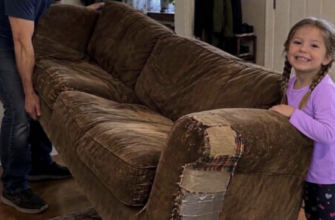
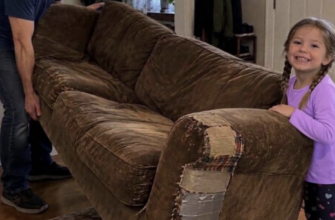
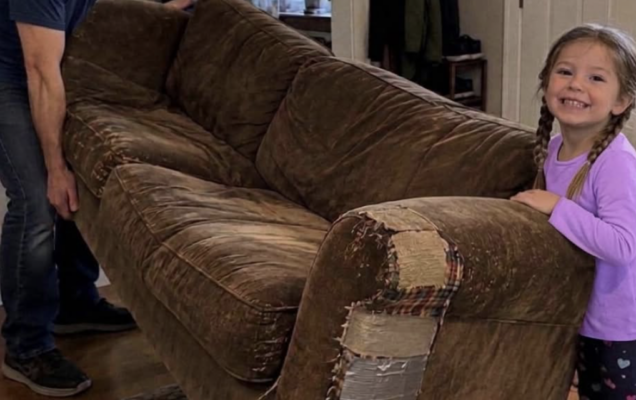
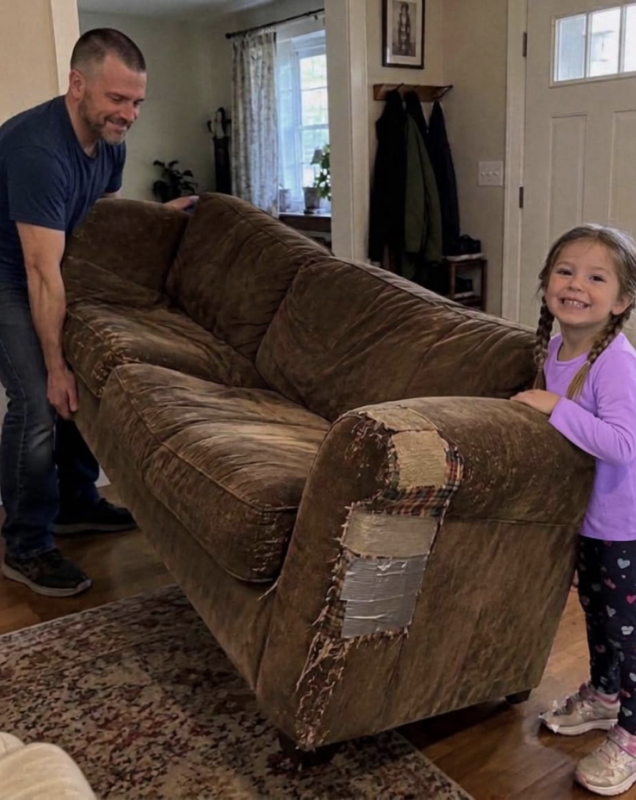
For two decades, I’d insisted that we replace the dreadful brown couch. Its center drooped, three repairs covered an arm, and standing up required an embarrassing rocking maneuver.
Durante dos décadas, había insistido en que reemplazáramos el horrible sofá marrón. Su centro se hundía, tres reparaciones cubrían un brazo, y ponerse de pie requería una maniobra de balanceo vergonzosa.
“Arthur, we’re buying a new couch.”
—Arthur, vamos a comprar un sofá nuevo.
He would tap the seat beside him and grin.
Él daba golpecitos en el asiento a su lado y sonreía.
“This one makes you sit closer to me, Mon.”
—Este hace que te sientes más cerca de mí, Mon.
“That’s because the springs are trying to swallow us.”
—Eso es porque los resortes están tratando de tragarnos.
He always laughed and tugged me down beside him. Arthur could repair nearly anything, and believed practically everything was worth repairing.
Él siempre se reía y me jalaba para sentarme a su lado. Arthur podía reparar casi cualquier cosa, y creía que prácticamente todo valía la pena repararlo.
After his death, that uncomfortable sofa became the only place where sleep came easily. I curled beneath his blanket on his usual side, letting the television play until dawn.
Después de su muerte, ese sofá incómodo se convirtió en el único lugar donde el sueño llegaba fácilmente. Me acurrucaba bajo su manta en su lado habitual, dejando que la televisión se reprodujera hasta el amanecer.
Our twenty-nine-year-old daughter, Aurora, eventually confronted me. She had inherited Arthur’s dry wit alongside my determination.
Nuestra hija de veintinueve años, Aurora, finalmente me confrontó. Había heredado el humor seco de Arthur junto con mi determinación.
“Mom, you can’t keep sleeping out here.”
—Mamá, no puedes seguir durmiendo aquí afuera.
“I’m comfortable, honey.”
—Estoy cómoda, cariño.
“You complained about that couch for half my childhood.”
—Te quejaste de ese sofá durante la mitad de mi infancia.
“People change.”
—La gente cambia.
She lowered herself beside me.
Ella se sentó a mi lado.
“Dad wouldn’t want you sleeping with the remote digging into your back.”
—Papá no querría que durmieras con el control remoto clavándose en tu espalda.
I almost laughed, but then she took my hand.
Casi me río, pero entonces ella tomó mi mano.
“You don’t have to keep everything exactly as he left it.”
—No tienes que mantener todo exactamente como él lo dejó.
That evening, I advertised the couch online for forty dollars. Three times I nearly removed the listing.
Esa noche, anuncié el sofá en línea por cuarenta dólares. Tres veces casi eliminé el anuncio.
Josh arrived the next afternoon with his friend Liam and his little daughter, Emma. The girl immediately scrambled onto the cushions.
Josh llegó a la tarde siguiente con su amigo Liam y su pequeña hija, Emma. La niña inmediatamente se subió a los cojines.
“Daddy, look! We both fit!”
—¡Papi, mira! ¡Los dos cabemos!
Josh smiled and explained his circumstances.
Josh sonrió y explicó su situación.
“I’ve been furnishing our apartment since my divorce. We’ve been watching cartoons on the floor.”
—He estado amueblando nuestro apartamento desde mi divorcio. Hemos estado viendo dibujos animados en el piso.
He offered the full forty dollars, but I returned twenty.
Él ofreció los cuarenta dólares completos, pero le devolví veinte.
“Buy her something nice, sweetheart. She deserves a treat on her new couch.”
—Cómprale algo bonito, cariño. Se merece un gusto en su sofá nuevo.
“Are you sure?”
—¿Está segura?
“Take it before I change my mind.”
—Llévatelo antes de que cambie de opinión.
Liam helped him carry it away. I wanted to stop them, but instead watched Arthur’s treasured seat vanish down the street. That night, for the first time since the funeral, I slept in our bedroom.
Liam lo ayudó a llevárselo. Quería detenerlos, pero en cambio vi el asiento preciado de Arthur desaparecer calle abajo. Esa noche, por primera vez desde el funeral, dormí en nuestra habitación.
The next day, Josh stood awkwardly in my kitchen.
Al día siguiente, Josh estaba incómodo en mi cocina.
“Emma dropped a pencil between the cushions last night,” he explained. “I turned the couch over and noticed the fabric underneath had been sewn shut by hand.”
—Emma dejó caer un lápiz entre los cojines anoche —explicó—. Volteé el sofá y noté que la tela de abajo había sido cosida a mano.
“Arthur repaired that thing constantly.”
—Arthur reparaba esa cosa constantemente.
“That’s what I figured. But one seam looked newer.”
—Eso imaginé. Pero una costura parecía más nueva.
He put the parcel on the table.
Él puso el paquete sobre la mesa.
“Did you know what he was hiding inside?”
—¿Sabía lo que él estaba escondiendo adentro?
I shook my head.
Negué con la cabeza.
“I opened the wrapping,” Josh admitted. “I read the first few lines before I realized it was private. I’m sorry.”
—Abrí el envoltorio —admitió Josh—. Leí las primeras líneas antes de darme cuenta de que era privado. Lo siento.
He offered to return the twenty dollars and even bring back the couch.
Él ofreció devolver los veinte dólares e incluso traer de vuelta el sofá.
“Emma loves the couch, but if you want it back, I’ll bring it over.”
—Emma ama el sofá, pero si lo quiere de vuelta, se lo traigo.
I studied my husband’s handwriting.
Estudié la letra de mi esposo.
“Keep the couch, Josh. She needs somewhere to watch her cartoons.”
—Quédate con el sofá, Josh. Ella necesita un lugar donde ver sus dibujos animados.
Once Josh left, I fetched scissors and opened the wrapping.
Una vez que Josh se fue, busqué tijeras y abrí el envoltorio.
—
Rubber bands held together a substantial collection of handwritten pages. A letter lay on top, bearing the date June 14: Maisie’s birthday. Our first child would have been thirty-three that year, but she had survived only eight months.
Ligas sostenían una colección sustancial de páginas escritas a mano. Una carta estaba encima, con la fecha del 14 de junio: el cumpleaños de Maisie. Nuestra primera hija habría cumplido treinta y tres ese año, pero solo había sobrevivido ocho meses.
Arthur’s opening words made me sit down.
Las primeras palabras de Arthur me hicieron sentarme.
“I couldn’t tell you this while I was alive.”
—No pude decirte esto mientras estaba vivo.
“Arthur, what have you done?”
—Arthur, ¿qué has hecho?
A title followed: The Life We Didn’t Get. Its opening chapter was called Maisie’s Fifth Birthday.
Seguía un título: La vida que no tuvimos. Su capítulo inicial se llamaba El quinto cumpleaños de Maisie.
Arthur portrayed a little girl stubbornly refusing to wear matching socks.
Arthur retrataba a una niña que se negaba obstinadamente a usar calcetines iguales.
“Nobody can see them inside my shoes,” Maisie argued.
—Nadie puede verlos dentro de mis zapatos —argumentaba Maisie.
“They’ll know,” her mother replied.
—Lo sabrán —respondía su madre.
“Then they shouldn’t be looking.”
—Entonces no deberían estar mirando.
I laughed despite myself. He’d given Maisie my stubbornness. In the story, she demanded chocolate cake, but Arthur mistakenly bought one decorated with raspberries. She refused a bite until he removed every berry.
Me reí a pesar de mí misma. Le había dado a Maisie mi terquedad. En la historia, ella exigía pastel de chocolate, pero Arthur compró por error uno decorado con frambuesas. Ella se negó a probar bocado hasta que él quitó cada baya.
Then I read his description of me watching our daughter blow out five candles, finally free from wondering what that imagined birthday might have been like.
Luego leí su descripción de mí viendo a nuestra hija soplar cinco velas, finalmente libre de preguntarme cómo habría sido ese cumpleaños imaginado.
The words made me stop. We’d spent years grieving the birthdays our little girl never reached. Arthur had quietly invented them.
Las palabras me hicieron detenerme. Habíamos pasado años lamentando los cumpleaños que nuestra pequeña nunca alcanzó. Arthur los había inventado en silencio.
At eight, Maisie learned cycling. By twelve, she dreamed of becoming a veterinarian. At sixteen, she introduced a boyfriend who called Arthur “buddy,” a word he couldn’t stand.
A los ocho, Maisie aprendió a andar en bicicleta. A los doce, soñaba con ser veterinaria. A los dieciséis, presentó a un novio que llamaba a Arthur “amigo”, una palabra que no soportaba.
The manuscript continued through school dances, disagreements, vacations, her first apartment, and even her wedding. My laughter faded into bewilderment. How long had Arthur been writing these scenes? Why had he never shown me?
El manuscrito continuaba a través de bailes escolares, desacuerdos, vacaciones, su primer apartamento e incluso su boda. Mi risa se desvaneció en desconcierto. ¿Cuánto tiempo había estado Arthur escribiendo estas escenas? ¿Por qué nunca me las había mostrado?
I carried the pages upstairs to his desk near our bedroom window. Since his death, I’d hardly touched it.
Llevé las páginas arriba a su escritorio cerca de la ventana de nuestra habitación. Desde su muerte, apenas lo había tocado.
“All right, mister. Let’s see what else you’ve been keeping.”
—Muy bien, señor. Veamos qué más has estado guardando.
The upper drawer contained old batteries. In another were three notebooks, including one covering twelve years of notes: Maisie learning to swim, receiving a disastrous haircut, and being taught to drive by me.
El cajón superior contenía pilas viejas. En otro había tres cuadernos, incluido uno que cubría doce años de notas: Maisie aprendiendo a nadar, recibiendo un corte de pelo desastroso, y siendo enseñada a conducir por mí.
Near the end, Arthur had recorded that he’d hidden the manuscript in the couch and needed courage to show Monica. Another instruction was underlined: Don’t make her perfect.
Cerca del final, Arthur había registrado que había escondido el manuscrito en el sofá y necesitaba valor para mostrárselo a Monica. Otra instrucción estaba subrayada: No la hagas perfecta.
He had deliberately imagined an imperfect daughter who made mistakes and argued. I returned to the wedding scene, where I fastened Maisie’s dress before a mirror.
Había imaginado deliberadamente a una hija imperfecta que cometía errores y discutía. Volví a la escena de la boda, donde yo abrochaba el vestido de Maisie frente a un espejo.
“Mom, you’re making that face.”
—Mamá, estás poniendo esa cara.
“What face?”
—¿Qué cara?
“The one you make when you’re trying not to cry.”
—La que pones cuando estás tratando de no llorar.
Arthur had remembered that expression. Through all those evenings sitting beside me, he’d pictured the child we’d lost growing older.
Arthur había recordado esa expresión. A través de todas esas noches sentado a mi lado, había imaginado a la niña que perdimos creciendo.
But another thought troubled me: Aurora had actually grown up with us. Why was our living daughter absent from these pages? I took the manuscript and drove to her apartment.
Pero otro pensamiento me preocupaba: Aurora había crecido realmente con nosotros. ¿Por qué nuestra hija viva estaba ausente de estas páginas? Tomé el manuscrito y conduje a su apartamento.
Aurora opened her door, alarmed.
“Mom? What’s wrong?”
Aurora abrió su puerta, alarmada.
—¿Mamá? ¿Qué pasa?
“Your father wrote something I never knew about.”
—Tu padre escribió algo que nunca supe.
She invited me inside and offered coffee.
Ella me invitó a entrar y ofreció café.
“Come in. I’ll make coffee.”
—Entra. Haré café.
“Please don’t make that expensive stuff you bought me last time.”
—Por favor, no hagas esa cosa cara que me compraste la última vez.
“It’s regular coffee, Mom.”
—Es café normal, mamá.
“It tasted like burnt toast.”
—Sabía a pan tostado quemado.
She laughed as she headed for the kitchen. I placed the pages on her table, and she noticed their title.
Ella se rió mientras se dirigía a la cocina. Coloqué las páginas sobre su mesa, y ella notó su título.
“Dad wrote this?”
—¿Papá escribió esto?
“He did.”
—Sí.
She leafed through them.
Ella las hojeó.
“About Maisie?”
—¿Sobre Maisie?
“About what her life might have been.”
—Sobre lo que su vida podría haber sido.
After reading several passages, she looked at me.
Después de leer varios pasajes, me miró.
“I wish he’d shown me.”
—Ojalá me lo hubiera mostrado.
“Why?”
—¿Por qué?
“Because I would’ve liked to know more about her.”
—Porque me habría gustado saber más sobre ella.
I reached for Aurora’s hand.
Tomé la mano de Aurora.
“Honey, Maisie was gone before you were born. We didn’t get to know enough about her either.”
—Cariño, Maisie se fue antes de que nacieras. Nosotros tampoco llegamos a saber lo suficiente sobre ella.
“I wasn’t asking you to change that.”
—No te estaba pidiendo que cambiaras eso.
“Then what are you asking?”
—Entonces, ¿qué estás preguntando?
She closed the book.
Ella cerró el libro.
“Why was it so hard to talk about her?”
—¿Por qué era tan difícil hablar de ella?
I insisted that we had discussed Maisie, but Aurora disagreed.
Insistí en que habíamos hablado de Maisie, pero Aurora no estuvo de acuerdo.
“We talked about Maisie.”
—Hablamos de Maisie.
“Not really, Mom.”
—No realmente, mamá.
“That’s not true.”
—Eso no es cierto.
“When I was six, I found her photograph in Dad’s drawer. Remember?”
—Cuando tenía seis años, encontré su fotografía en el cajón de papá. ¿Recuerdas?
I remembered the yellow duck-patterned onesie and Maisie’s tiny hand gripping Arthur’s finger.
Recordé el mameluco amarillo con estampado de patos y la pequeña mano de Maisie agarrando el dedo de Arthur.
“You told me she was my sister,” Aurora continued. “Then you put the photograph away.”
—Me dijiste que era mi hermana —continuó Aurora—. Luego guardaste la fotografía.
“I didn’t want to upset you.”
—No quería molestarte.
“I was six, Mom. I just wanted to know whether she looked like me.”
—Tenía seis años, mamá. Solo quería saber si se parecía a mí.
“Your father and I did our best.”
—Tu padre y yo hicimos lo mejor que pudimos.
“I know. But I’m trying to tell you what it felt like, and you keep telling me why you did it.”
—Lo sé. Pero estoy tratando de decirte cómo se sentía, y tú sigues diciéndome por qué lo hiciste.
Unable to bear her words, I got up.
Incapaz de soportar sus palabras, me levanté.
“I should go.”
—Debería irme.
“Mom, please don’t leave because we disagree.”
—Mamá, por favor no te vayas porque no estamos de acuerdo.
Nevertheless, I took my purse and left.
Sin embargo, tomé mi bolso y me fui.
Halfway home, I parked and remembered little Aurora holding her sister’s picture.
“Would she have played with me?”
A mitad del camino a casa, me estacioné y recordé a la pequeña Aurora sosteniendo la foto de su hermana.
—¿Habría jugado conmigo?
“Probably, sweetheart.”
—Probablemente, cariño.
I’d removed the photo to spare her pain, never considering what my silence taught her. I called.
Había quitado la foto para evitarle dolor, sin considerar nunca lo que mi silencio le enseñaba. Llamé.
“Mom?”
—¿Mamá?
“I shouldn’t have walked out. I’m sorry.”
—No debí haberme marchado. Lo siento.
She listened quietly while I admitted how difficult it was to hear that we’d made her feel excluded.
Ella escuchó en silencio mientras yo admitía lo difícil que era escuchar que la habíamos hecho sentir excluida.
“I wasn’t trying to hurt you.”
—No estaba tratando de lastimarte.
“I’d still like to hear the rest.”
—Todavía me gustaría escuchar el resto.
“Are you sure?”
—¿Estás segura?
“Come for dinner tomorrow. We can talk properly.”
—Ven a cenar mañana. Podemos hablar adecuadamente.
After a pause, she agreed. The manuscript rested on the passenger seat. I wasn’t done reading Arthur’s words, but I couldn’t ignore hers again.
Después de una pausa, ella aceptó. El manuscrito descansaba en el asiento del pasajero. No había terminado de leer las palabras de Arthur, pero no podía ignorar las de ella otra vez.
Aurora brought dessert the next evening.
Aurora trajo postre la noche siguiente.
“I brought pie,” she said.
—Traje pastel —dijo.
“I made chicken.”
—Hice pollo.
“Good. I was worried you’d serve the manuscript.”
—Bien. Me preocupaba que sirvieras el manuscrito.
We laughed, and later, over dinner, I finally asked what she remembered of Maisie.
Nos reímos, y más tarde, durante la cena, finalmente le pregunté qué recordaba de Maisie.
“Tell me what you remember about Maisie.”
—Dime qué recuerdas de Maisie.
“Honestly?”
—¿Honestamente?
“Especially honestly.”
—Especialmente honestamente.
Aurora recalled Arthur becoming withdrawn every June and me avoiding family albums.
Aurora recordó que Arthur se volvía retraído cada junio y que yo evitaba los álbumes familiares.
“I remember Dad going quiet every June. And I remember you avoiding the photo albums.”
—Recuerdo que papá se ponía callado cada junio. Y recuerdo que tú evitabas los álbumes de fotos.
“I couldn’t look at them sometimes.”
—A veces no podía mirarlos.
“I figured that out when I got older.”
—Me di cuenta de eso cuando crecí.
“What did you think when you were little?”
—¿Qué pensabas cuando eras pequeña?
She pushed potatoes around her plate before answering.
Ella empujó las papas por su plato antes de responder.
“Sometimes I thought you wished our family had turned out differently.”
—A veces pensaba que deseabas que nuestra familia hubiera resultado diferente.
I grabbed her hand.
Tomé su mano.
“Aurora, we never wished you away.”
—Aurora, nunca deseamos que no estuvieras.
“I believe you, Mom. I’m just telling you what it felt like.”
—Te creo, mamá. Solo te estoy diciendo cómo se sentía.
“Then why didn’t you ask us?”
—Entonces, ¿por qué no nos preguntaste?
“Because whenever I mentioned Maisie, you looked so sad. I even drew a picture of all four of us once, but I threw it away. I thought it might upset you.”
—Porque cada vez que mencionaba a Maisie, te veías tan triste. Incluso dibujé una vez un retrato de los cuatro, pero lo tiré. Pensé que podría molestarte.
I understood that both of us had stayed quiet to shield the other.
Entendí que ambas nos habíamos quedado calladas para proteger a la otra.
“I’m sorry,” I said.
—Lo siento —dije.
Aurora squeezed my fingers.
Aurora apretó mis dedos.
“I wish we’d spoken about her more.”
—Ojalá hubiéramos hablado más de ella.
I admitted that I still couldn’t understand why Arthur had spent so many years imagining Maisie’s adulthood.
Admití que todavía no podía entender por qué Arthur había pasado tantos años imaginando la adultez de Maisie.
“There’s something I haven’t figured out about your father’s book.”
—Hay algo que no he descubierto sobre el libro de tu padre.
“What?”
—¿Qué?
“Why he spent so many years writing about the life Maisie never had.”
—Por qué pasó tantos años escribiendo sobre la vida que Maisie nunca tuvo.
Aurora considered it.
Aurora lo consideró.
“Maybe he wanted to know her too. And maybe that’s how he tried to heal from her.”
—Quizás él también quería conocerla. Y quizás así intentó sanar de ella.
Her explanation stayed with me. As she departed, she asked to read the rest eventually.
Su explicación se quedó conmigo. Mientras se marchaba, pidió leer el resto eventualmente.
“Can I read the rest when you’re finished?”
—¿Puedo leer el resto cuando termines?
“Of course.”
—Por supuesto.
“And Mom?”
—¿Y mamá?
“Yes?”
—¿Sí?
“I don’t need you to have every answer. I never did.”
—No necesito que tengas todas las respuestas. Nunca lo necesité.
I hugged her.
La abracé.
“That’s fortunate, because I’m running short.”
Later, I resumed reading. After Maisie’s college departure and a phone call about ruined laundry, a different chapter title appeared: Aurora’s First Bicycle.
—Eso es afortunado, porque me estoy quedando corta.
Más tarde, reanudé la lectura. Después de la partida de Maisie a la universidad y una llamada telefónica sobre la ropa arruinada, apareció un título diferente: La primera bicicleta de Aurora.
The scene belonged to real life. Aurora was seven when I decided she could ride without training wheels. Arthur disagreed, but I insisted. She tumbled twice before successfully crossing the driveway, while I ran alongside cheering.
La escena pertenecía a la vida real. Aurora tenía siete años cuando decidí que podía andar sin rueditas de entrenamiento. Arthur no estuvo de acuerdo, pero insistí. Ella cayó dos veces antes de cruzar con éxito la entrada, mientras yo corría a su lado animándola.
“Did you see me, Daddy?”
—¿Me viste, papi?
Arthur had written that he saw both his daughter riding and me laughing as I followed.
Arthur había escrito que la vio a ella montando y a mí riéndome mientras la seguía.
The next chapter, The Birthday Cake Disaster, recalled ten-year-old Aurora accidentally replacing sugar with salt in his birthday cake. He managed two bites before confessing something was wrong. I laughed until tears came.
El siguiente capítulo, El desastre del pastel de cumpleaños, recordaba a Aurora, de diez años, reemplazando accidentalmente el azúcar con sal en su pastel de cumpleaños. Él logró dar dos bocados antes de confesar que algo estaba mal. Me reí hasta que me salieron lágrimas.
Then came The Day Monica Sang Again. Aurora had invented ridiculous lyrics while I washed dishes, and I’d joined in unknowingly. Arthur had stood listening from the doorway, astonished to hear me sing again.
Luego vino El día que Monica volvió a cantar. Aurora había inventado letras ridículas mientras yo lavaba los platos, y me había unido sin darme cuenta. Arthur había estado escuchando desde la puerta, asombrado de oírme cantar de nuevo.
Only then did I understand. One half of the manuscript described what Maisie never experienced. The other preserved the moments we actually shared with Aurora. He hadn’t overlooked our younger daughter. He had been remembering both.
Solo entonces entendí. Una mitad del manuscrito describía lo que Maisie nunca experimentó. La otra preservaba los momentos que realmente compartimos con Aurora. No había pasado por alto a nuestra hija menor. Había estado recordando a ambas.
—
The final pages contained a letter addressed to me.
Las páginas finales contenían una carta dirigida a mí.
“Monica,
—Monica,
I was afraid you’d read the beginning and think I wanted that life more than ours.
Tenía miedo de que leyeras el principio y pensaras que quería esa vida más que la nuestra.
I didn’t.”
No lo quería.
I lowered it, overwhelmed.
La bajé, abrumada.
“Then why didn’t you tell me, Arthur?”
—Entonces, ¿por qué no me lo dijiste, Arthur?
From beside his empty chair, I continued.
Desde al lado de su silla vacía, continué.
“I wanted Maisie to grow up. I wanted to hear her argue about homework and complain about my cooking.
—Quería que Maisie creciera. Quería oírla discutir sobre la tarea y quejarse de mi cocina.
But I never wished Aurora away.
Pero nunca deseé que Aurora no estuviera.
When she was born, I loved her for who she was. Not because she could replace anyone.”
Cuando nació, la amé por quien era. No porque pudiera reemplazar a nadie.
I pictured Arthur carrying infant Aurora around our home, inventing lullabies because he never remembered the real ones.
Imaginé a Arthur cargando a la pequeña Aurora por nuestra casa, inventando canciones de cuna porque nunca recordaba las reales.
“You certainly loved making a fool of yourself for her,” I whispered.
—Ciertamente amabas hacer el ridículo por ella —susurré.
His next words explained the whole manuscript.
Sus siguientes palabras explicaban todo el manuscrito.
“I wrote about Maisie because I wanted to imagine the things we’d missed.
—Escribí sobre Maisie porque quería imaginar las cosas que nos habíamos perdido.
I wrote about Aurora because I didn’t want to forget the wonderful things we had.
Escribí sobre Aurora porque no quería olvidar las cosas maravillosas que teníamos.
And I wrote about you because, even when we couldn’t talk about everything, I loved the life we made.”
Y escribí sobre ti porque, incluso cuando no podíamos hablar de todo, amaba la vida que hicimos.
At the bottom, he’d confessed:
Al final, había confesado:
“I wish I’d been brave enough to show you.”
—Ojalá hubiera sido lo suficientemente valiente para mostrártelo.
I brushed my hand across the words.
Pasé mi mano por las palabras.
“You could’ve shown me, you stubborn man.”
—Podrías habérmelo mostrado, hombre terco.
Thinking of my own mistake in walking away from Aurora, I reached for the phone.
Pensando en mi propio error al alejarme de Aurora, tomé el teléfono.
“Can you come over tomorrow?”
—¿Puedes venir mañana?
“Is everything okay?”
—¿Todo está bien?
“Yes. But there’s something in your father’s book I want you to read.”
—Sí. Pero hay algo en el libro de tu padre que quiero que leas.
“Did you find something else?”
—¿Encontraste algo más?
“I found something about us.”
—Encontré algo sobre nosotras.
She paused before promising to visit after lunch.
Ella hizo una pausa antes de prometer visitarme después del almuerzo.
“Then I’ll come after lunch.”
The next afternoon, I gave Aurora the final chapters. She read about learning to cycle, ruining the birthday cake, and unknowingly bringing music back into our home. Tears filled her eyes when she finished Arthur’s letter.
—Entonces vendré después del almuerzo.
A la tarde siguiente, le di a Aurora los capítulos finales. Ella leyó sobre aprender a andar en bicicleta, arruinar el pastel de cumpleaños, y traer sin saberlo la música de vuelta a nuestro hogar. Las lágrimas llenaron sus ojos cuando terminó la carta de Arthur.
“He remembered all of that?”
—¿Él recordaba todo eso?
“Apparently, your father remembered more than either of us gave him credit for.”
—Aparentemente, tu padre recordaba más de lo que cualquiera de nosotras le dábamos crédito.
She smiled hesitantly.
Ella sonrió con vacilación.
“Do you think he wished Maisie was here instead of me?”
—¿Crees que deseaba que Maisie estuviera aquí en lugar de mí?
I drew her close.
La atraje cerca.
“No, sweetheart. He wished both his girls were here.”
—No, cariño. Deseaba que ambas de sus niñas estuvieran aquí.
She rested against my shoulder. I reopened the manuscript and noticed one chapter remained unread.
Ella descansó contra mi hombro. Reabrí el manuscrito y noté que quedaba un capítulo sin leer.
“There’s one chapter I haven’t read yet.”
—Hay un capítulo que aún no he leído.
The title was The Day You Came Home.
El título era El día que llegaste a casa.
“Did Dad really remember the day I was born that clearly?”
—¿Papá realmente recordaba el día en que nací con tanta claridad?
“He forgot where he parked the car that morning,” I said.
—Olvidó dónde estacionó el auto esa mañana —dije.
Aurora laughed, and I turned the page.
Aurora se rió, y yo volteé la página.
“But I think he remembered everything else.”
—Pero creo que recordaba todo lo demás.
She pulled her chair beside mine, and together we began reading.
Ella acercó su silla junto a la mía, y juntas comenzamos a leer.