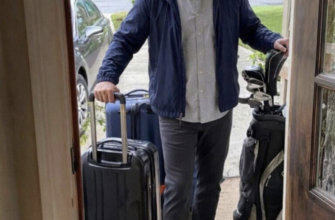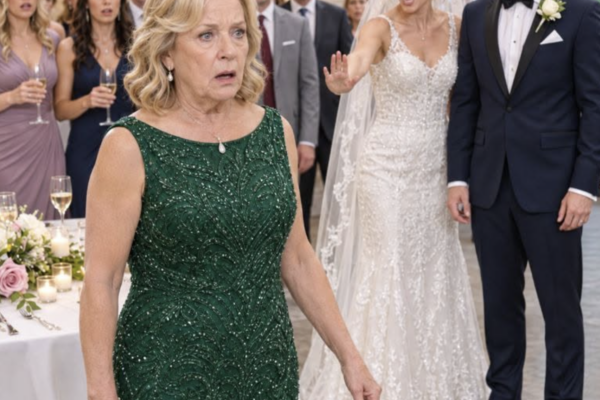
“Her family only. You never mattered to him. Please leave.”
Those were the first words my only son’s new wife said to me at his wedding.
At the entrance to a Hudson Valley stone-and-glass estate, Joselyn Hartwell wore a champagne gown that cost more than my first car. Two bridesmaids stood a few feet away, pretending to admire the flowers. I had been on the flagstone path for less than four seconds.
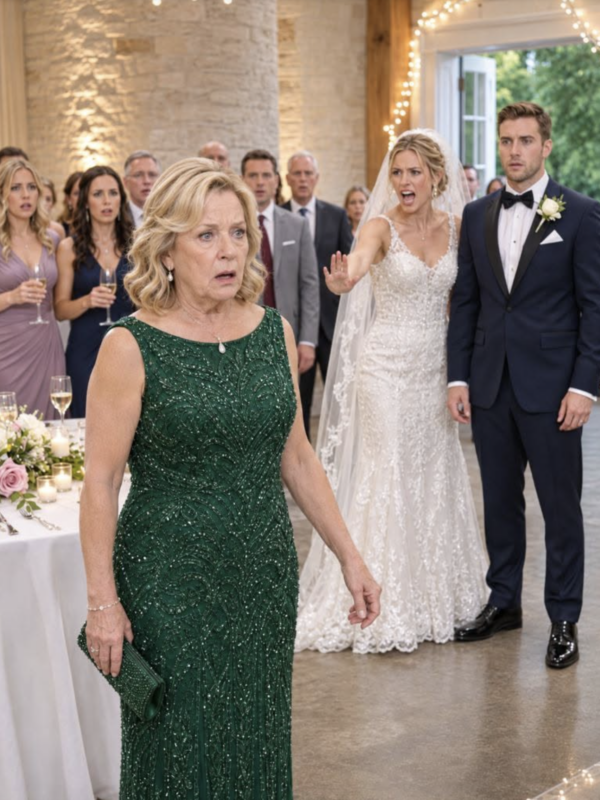
I was forty-eight, wearing a pearl-gray dress made by Ingrid, an Anchorage tailor who had dressed me for eleven years. She used to say I could look like a 1940s movie-poster actress if I stopped slumping like an exhausted accountant. That day I kept my shoulders back.
In my left hand I carried a velvet bag holding a leather case and platinum cufflinks engraved with my wedding date to my late husband, Theo, twenty-six years earlier. I’d had my son’s name engraved on the back. The engraver in Midtown Manhattan had gone quiet when I explained why they mattered. I wept at the airport and again during my connection. I had left Anchorage at 4:15 that morning and traveled nearly fourteen hours.
At Hartford, I reapplied lipstick under restroom lights that made everyone look freshly devastated. I hired a private driver and smoothed the fabric in the back seat, telling myself that seeing Bryce marry might close some of the distance between us.
Then I reached the venue.
Joselyn looked at me the way a courier is regarded at the wrong address—polite, inconvenienced, faintly impatient. She tilted her head and repeated herself slowly, as if my hearing, not her cruelty, were the problem.
“Her family only, Desiree. Please.”
Her bridesmaids abandoned their flowers.
I had organized eighty-seven weddings by then. I had soothed a bride whose mother wore the forbidden dress to the rehearsal dinner. I had handled a groom’s ex-girlfriend arriving by kayak. Over eighteen years of managing other people’s ceremonies, I had learned to stay composed while everyone else created a spectacle. I had never been the one excluded at the door.
I read the room professionally. Its message was: leave.
“Of course,” I said.
Two words. I may even have smiled. Midwestern women learn to smile at their own funerals if the lighting is flattering.
I turned and walked back down the stone path. My driver was waiting by the gate. He had probably hoped to carry the gift. After he saw my face through the windshield, he stayed silent for the forty-minute ride to the hotel. He deserved a larger tip.
I sat on the hotel bed in my coat, clutching the gift bag. Putting it aside would have made the rejection real. My phone buzzed twice. I ignored it.
One detail kept replaying. At the rehearsal dinner the night before, Joselyn’s father, Stanford Hartwell, had leaned across his asparagus and asked whether my company had ever done business with his Hartford commercial real-estate firm. I told him the truth: no. It had struck me as an odd question for his daughter’s future mother-in-law, but the noisy dinner distracted me.
Six days passed before I understood how much that question mattered.
I founded Maxwell and Lyall Events in 2007 after Theo’s death left me raising two children, holding four funeral casseroles, and facing an unaffordable mortgage. I started at a folding card table in a rented house’s spare room while my children slept upstairs. Eighteen years later, my clients’ surnames were on buildings, hospital wings, and university halls. I knew exactly what a Hudson Valley estate wedding cost. I knew the kind of family that chose the Hollander estate. I knew what a champagne gown meant from a bride who valued photographs above courtesy.
None of it spared me.
My daughter Renee was thirty-two and living in Portland with her husband, Femi. After nearly three years of trying and three rounds of IVF, she was finally pregnant. When she told me, I pulled over by the post office and sobbed until a stranger knocked on the window and offered me water.
Renee messaged Bryce that day. Forty-eight hours later he replied, “Congrats” and a baby emoji. Nothing else. Renee forwarded it to me. We hardly discussed what we already understood.
Bryce had changed after Theo died. At fourteen, he withdrew into a silence that never fully lifted. He went to Yale and grew polished. He could work a ninety-minute charity event with a wine glass and never spill a drop. He rarely answered calls. For years I blamed grief. Perhaps I overlooked something deeper.
That spring, Aspenwood, an Atlanta hospitality group, began courting me. They offered $4.2 million for Maxwell and Lyall. Marina Whitam, my senior planner and colleague of fourteen years, would stay on as president. We scheduled closing for November. I had built the company in pajamas at a card table beneath two grieving children. Walking away for four million should have been simple. It wasn’t. I barely slept for a week.
That summer Bryce announced Joselyn had accepted his proposal. Before the wedding, I met her only twice: once at brunch in New York and once at the rehearsal dinner. Her friendliness felt practiced. She used the phrase “your generation” twice in one sentence and said her parents had “such a vision” for the wedding, in the tone of a woman describing parents guided by expensive Pinterest fantasies and cutlery anxiety.
In October, four months before the wedding, I called Vivien Tate. Vivien owned the Hollander estate. We had worked together for twenty years, and my children’s photographs were on her refrigerator. I asked to pay for Bryce and Joselyn’s venue as their gift. She gave me her closest-friend rate. On October 14, I wired $185,000 to the Hollander estate. Vivien agreed not to tell the couple. I wanted Bryce to believe he had paid for it himself. I wanted him to feel proud, like a man starting his own life.
In hindsight, I want to shake my former self. Why shield his pride with my generosity? But eighteen years of solo parenting had made such sacrifices habitual.
That morning I had my dress, the velvet bag, the leather case, the engraved cufflinks, and more hope than I’d felt in ten years. By afternoon I was standing abandoned in a parking lot.
Vivien left a voicemail the next day. I saw it when I landed in Seattle and avoided listening. The excuse lasted through Sunday, Monday, and Tuesday. By Wednesday it had gone unheard for nearly five days, frightening me like unopened tax correspondence.
Marina picked me up at the Anchorage airport. One look at my face silenced her questions. At my front door she said, “I’m going to check on you tomorrow and the day after that, and you can’t fire me because I have your signature on file.” Then she hugged me and left.
I put the present on the entry table and collapsed onto the foyer floor. I wore the same pajamas for three days. Twice, trail mix became supper. The third night I ate crackers and cheese meant for a charcuterie platter. The curtains stayed shut. I tried to watch a Florida property-scandal documentary and realized I had paused it twenty minutes earlier. The remote was under a sofa cushion beside a fork. I couldn’t explain the fork.
I also obsessively checked social media, which I am not proud of. Joselyn had used a wedding hashtag: Heartwell Hearts. I examined all 312 posts. I enlarged background guests. At one in the morning, a forty-eight-year-old woman sat on her kitchen floor studying someone’s elbow to identify a Hartwell cousin. Not one photograph included me. Joselyn’s mother, Margot, appeared in seventy-one. I counted. Four showed Margot posing alone beside the cake. Even the cake had more prominence than I did.
Then I found video of Bryce’s toast, uploaded with sentimental piano accompaniment. He thanked Joselyn’s parents, grandparents, and all three brothers individually. He thanked “all the family who flew in to make this day what it was.” He did not mention me, Renee, or Theo—dead eleven years and, had he lived, desperate to be there.
I wept harder than I had since Theo’s funeral.
On the fourth morning, the bell rang. Through the peephole I saw Marina in her work coat, holding two coffees and a foil-wrapped frittata. She saw the peephole shift.
“Desiree Annette Maxwell,” she said through the door, “you open this door or I will use my key and I will judge you.”
I let her in. She surveyed me, the kitchen, and my cracker-based meals. Then she put down the coffees.
“We close in three weeks. Aspenwood is doing a final walkthrough next Thursday. I cannot do this without you. Also, I love you. Both things are true.”
She sat me on the sofa and made me eat eggs. Haltingly, I told her about the wedding. Speaking it aloud made the rejection newly real. Marina let me recount everything without once reminding me that she had warned me about Joselyn—twice, both in a Costco parking lot.
When I described leaving, she set down her cup.
“Okay,” she said. Then, quieter, “Okay.”
In Marina’s tone, that meant someone was about to have an unpleasant week.
Later, reviewing emails at my counter, she frowned at her phone. “Aspenwood’s CEO just liked one of Margot Hartwell’s charity board posts.”
I looked up. “What?”
“Dana Aragon,” Marina said. “She liked a post from your son’s mother-in-law yesterday. Hartford literacy gala in June.”
Our eyes met across the island.
“Coincidence?” I asked.
Marina tilted her head the way she does when she is already certain the answer is no. “Probably nothing.”
It mattered, though I didn’t yet know how.
Renee video-called that evening. At twenty-four weeks pregnant, she wore an oversized sweatshirt, one hand resting on her belly. She listened to my tearful, detailed account. When I got to the gift bag still sitting on my entry table, she said quietly, “Mom, he doesn’t deserve those cufflinks.”
I stayed silent. She didn’t insist.
I began to question whether I had spent eleven years parenting one child while excusing the other.
On Friday, day six, I sat in my study—freshly showered, properly dressed, coffee and a yellow legal pad on the desk. Business would not stop for grief. For three weeks, professional duties outranked personal recovery.
Bryce called. I answered.
“Hey, Mom,” he said.
It was the voice he used at sixteen to borrow the car: casual, rushed, as if nothing had happened.
“Hi, sweetheart,” I said. Even after everything, I still called him sweetheart. Old maternal habits persisted.
“So, look,” Bryce said, “the Hollander estate billing department has been calling me. There’s an outstanding balance. It’s $74,000. Joselyn and I talked about it, and as my mother, it’s your duty. You need to handle it.”
I went motionless.
As my mother, it’s your duty.
That was not Bryce’s usual voice. I had known him since a nineteen-hour labor in an Anchorage blizzard, when the doctor arrived in snow boots. I recognized his every turn of phrase. That phrasing was unfamiliar: polished, icy, rehearsed. Someone had scripted it.
Instead of accusing him, I said, “Let me look into it. I’ll call you back.”
“Mom, you don’t need to look into it. It’s a wedding bill. You’re the mother of the groom.”
“I said I’ll look into it, Bryce.”
He hesitated, then sighed. That sigh stayed with me. He sounded annoyed that his mother was complicating things.
“Fine,” he said. “But it’s getting bad. They’re talking about collections. Joselyn is really stressed.”
Joselyn was really stressed.
I ended the call.
I sat on my office floor, properly dressed for the first time in six days, hearing the neighbor’s dog and my forgotten kettle whistle. Then understanding flashed like a backyard security lamp. The figures didn’t add up.
I had paid Vivien $185,000, documented by receipt, email, and her handwritten thanks on my study shelf. The venue was settled. Where had $74,000 come from?
Vivien answered on the second ring. “Oh, honey,” she said. “I was hoping you’d call.”
“What is the $74,000?”
There was a pause. “Desiree, sit down. I need to tell you what happened on the day of the wedding.”
I sat.
Vivien explained dates, names, amounts, and sequences from her meticulous records. Margot Hartwell had arrived at nine in the morning and started adding things: a champagne tower, a premium bar extension, an orchestra swap from a quartet to a six-piece, eight additional floral installations from a Hartford florist she had brought in, an upgraded entrée, a late-night dessert station. By two o’clock the additions topped $60,000. By dinner they had reached $74,000.
At 4:30, Vivien privately asked Bryce for his payment card. His American Express failed. His second card was declined. He promised to settle the following week, asked for the invoice, and returned to the reception.
“Vivien,” I asked, “who turned me away at the door?”
Her voice changed. “Honey, I didn’t even know that happened. I was inside dealing with the orchestra contract Margot had torn up. I would never have allowed that.”
I trusted her. Then I asked one more question. “Tell me about the Hartwells. What do you know?”
Vivien went quiet. Then she said, “We need to talk about Stanford.”
The next morning I sat at my island with an open notebook, three pens, two cold coffees, and speakerphone. Vivien spoke for forty minutes. I took painstaking notes on every name, date, amount, and revealing detail.
Stanford Hartwell, sixty-one, owned Hartwell Reston Commercial Real Estate in Hartford. On paper he held three office parks, two retail strips, and a small medical building. Underneath were three refinancings across eighteen months, two vendor disputes, and a bank relationship that was no longer warm.
Margot had been on the social committee of a Hartford charity board for nine years. The previous spring the board had quietly asked her to step down because her annual pledge had been outstanding for fourteen months. She refused to resign; the board let her stay.
Vivien called it a known Hudson Valley wedding pattern: a comeback wedding. A declining family stages a wedding as lavish as its former lifestyle to disguise its decline.
“The parties on the way down,” Vivien said, “are always bigger than the parties on the way up.”
I studied my notes. “And they thought I was paying for the comeback.”
Vivien was quiet for a second. “Honey, I think they thought you were paying for the whole rebuild.”
I shut the notebook.
Realizing your tormentors aren’t brilliant brings a peculiar calm. They haven’t outplanned you. They are weary people in finery trying to balance impossible figures. And they have exposed their calculation to the wrong woman.
Renee phoned at 10:30. She didn’t mention the pregnancy first, which was an immediate warning.
“Mom,” she said, “can I tell you something weird?”
“Always.”
“Bryce called me Wednesday, two days before he called you. He didn’t ask about the pregnancy. He didn’t ask about Femi. He asked if I could lean on you about the venue bill.”
I closed my eyes.
“He said you were being difficult,” she continued, “and that he needed me to be his ally on this one.”
My daughter’s voice broke. “I told him I’m twenty-four weeks pregnant, and he was asking me to lean on you.”
Margot posted publicly on Facebook that afternoon. She criticized a mother-in-law supposedly unable to meet her grown son’s wedding obligations, implying different standards of upbringing. She decorated it with rose emojis, as though that softened the attack.
Marina rang from work at 4:15. “Desiree, I saw it. Aspenwood saw it too.”
I rose.
“Dana Aragon just called the office,” Marina said. “She’s asking if there’s anything she should know that might affect closing.”
Aspenwood would soon pay $4.2 million for my card-table startup. The transfer was two weeks away. Yet Margot’s public accusation had made the CEO question my reliability.
“Get me Dana’s direct line,” I said. “I’ll call her in twenty minutes.”
I studied my reflection in the powder room. Six sleepless nights showed on my face. I applied lipstick—Cabernet Reserve, forty-two dollars at Nordstrom, reserved for closings and funerals. I drank a full glass of water, then phoned Dana Aragon.
I did not discuss the wedding, Joselyn, or $74,000. I reviewed Maxwell and Lyall’s third-quarter performance. I discussed Marina’s retention. I cited two contracts signed quietly in September. For eighteen minutes I spoke with the steadiness years of managing crises alone had taught me.
At the end, Dana said, “Desiree, I’m sorry I even asked.”
“Don’t be,” I said. “You did your job.”
Marina messaged immediately afterward: Closed her out clean. You’re a witch. I love you.
I laughed for the first time that week.
Then I remembered Stanford’s rehearsal-dinner question: “Has your firm ever done business with mine?”
I called my lawyer.
Russell Pike had represented me for nineteen years. He had roomed with Theo at the University of Washington, served as our best man, and delivered Theo’s eulogy. At sixty-seven, six-foot-three, he favored khakis and Oxford shirts in three blues. He affectionately called me kid. He had been a dependable father figure to my children.
I asked for advice on family finances. He said, “Kid, come to my office Monday.”
“Russell, tell me on the phone. I can’t wait until Monday.”
There was a pause. A lawyer pause.
Then he said, “Before I say this, how did the Hartwell family come up?”
“What do you mean, how did they come up?”
“How did Stanford Hartwell’s name come up?”
“Russell. He’s my son’s father-in-law as of last Saturday.”
Another pause. Then Russell said, “I’m going to read you something. Hang on.”
I heard his keyboard. I heard him stand and sit again.
“November eighth of last year,” he said, “I received a verification call from Hartford Heritage Bank. They were checking a co-signer signature on a commercial loan application for $1.2 million. The applicant was Hartwell Reston Commercial Real Estate. The co-signer listed was you.”
I made a sound that was not quite a word.
“The signature was not yours,” Russell said. “It was a strong imitation, but it was not yours. I knew because I have your signature on file from decades of documents, and because you would have told me before signing anyone’s commercial paper.”
He told the bank no. He told them to flag the application. Stanford withdrew it within forty-eight hours and apologized, claiming an administrative mistake.
“Russell,” I said.
“I didn’t tell you because I thought it was random identity misuse,” he said. “I had no reason to think that name would ever cross your life.”
“Stanford Hartwell used my name five months before I met him.”
“Yes.”
“Five months before his daughter introduced him to my son.”
“Yes.”
I went motionless.
Beside cold coffee, listening to Russell, I understood: my son’s marriage had been intertwined with the Hartwells’ schemes before he realized. Stanford had selected me as a target. First he had exploited my name for a loan; then he had targeted my money through the wedding. His daughter provided the connection; the scheme preceded it.
After hanging up, I went into the kitchen. I filled a glass with water, drank half, and watered a plant I had neglected for three weeks with the rest. There was probably symbolism there. I ignored it.
Bryce called again. I waited four rings to steady myself, then picked up.
“Mom, what is going on?” he said.
“Excuse me?”
“The Hollander estate is calling me three times a day. They’re talking about a payment plan. They said you were the original payer. Mom, did you make this confusing on purpose? Are you doing this to hurt me?”
I closed my eyes. “Bryce, where is Joselyn right now?”
“Why does that matter?”
“Is she in the room?”
“She’s right here.”
“Did Joselyn tell you to ask me that question?”
The silence that followed has never left me. Bryce had no convincing answer.
“Mom,” he said, “I have to go.”
He hung up.
At dusk I parked beside Lake Hood’s seaplane base and watched aircraft descend over the water. The heater ran; the radio stayed silent. A half-eaten box of crackers sat beside me, reflecting my poor coping habits. I ate straight from the box, a well-accessorized raccoon.
There I considered paying the $74,000. Yes, I considered it. For thirty-five minutes I nearly agreed. Not from weakness but exhaustion. Always being the fixer brings its own fatigue. I had made calls, packed lunches, signed checks, closed deals, buried pain, and stayed strong for everyone. For a moment I was prepared to surrender the entire amount simply to silence the pressure, even knowing the charges were not mine.
Then Renee called.
“Mom,” she said, “the baby kicked this morning while I was brushing my teeth. He kicked so hard I dropped the toothbrush.”
I wept quietly in the parked car.
Then she said, “I need to tell you something. The last real conversation I ever had with Dad, I was twenty. You were at the grocery store. He told me he was worried about Bryce.”
My grip tightened on the phone.
“He said Bryce could grow up small if nobody held the line. He said you loved him too much, and not to let you love him into being small. I never told you because I didn’t know what to do with it. I’m telling you now because I think you need it.”
I sat in the car without speaking.
Then Renee said, “Mom, drive home.”
I drove home.
At home I wrote one line at the top of a fresh legal pad: One call. I say it once. I underlined it before sleeping.
Sunday and Monday I processed seventy-three emails. I held two transition calls with Aspenwood. I reviewed a March client’s 1962-themed rehearsal dinner contract, though 1962 is a year, not a theme.
Russell brought the entire file Tuesday morning. He spread the documents over my dining table with surgical precision. The loan application bore Stanford Hartwell’s genuine signature beside a forged version of mine. My D normally loops backward; the fake didn’t. I might have missed it, but Russell recognized my signature after thirty years.
He explained my alternatives: pursue Stanford civilly for forgery, damages, costs, and a public record; refer his actions formally to authorities; or preserve a notarized statement and bank and legal records for use if he misused my name again—a sheathed weapon.
“What do you want?” Russell asked.
“I want option three for now.”
“Are you sure?”
“I have a daughter who is six months pregnant. I have a business closing in two weeks. I have one son I am about to lose. I do not have the energy this month to become the center of Stanford Hartwell’s public collapse. Put the sword on the wall. I want him to know it is there.”
Russell wrote it down. “Kid,” he said, “that is the most Theo thing I have heard out of your mouth in fifteen years.”
I fought back tears. I had few left.
Aspenwood requested another Wednesday meeting. Dana Aragon flew in from Atlanta. We met in my downtown conference room. I wore my navy suit and Cabernet Reserve lipstick. I drank exactly one coffee and one water. I guided Dana through ninety minutes of financials like a proud grandmother touring her own museum. Marina stayed mostly quiet; the figures spoke clearly.
At the end, Dana closed her folder. “Desiree,” she said, “I want to apologize for the call last Friday. I let a public post from a woman I have never met affect how I looked at a business I have spent eight months trying to acquire. I should not have.”
“I would have asked the same question,” I said. “Don’t apologize.”
“We close on the twenty-first as scheduled. The wire will hit by four Eastern.”
In the elevator, Marina hugged me for twelve seconds. For some reason, I counted.
I phoned Renee that evening. “Tomorrow I’m calling him.”
“Do you want Femi to fly up?” she asked. “He can be on the next plane.”
“No, baby. This part I do alone.”
“What are you going to say?”
“I’m going to say the truth once. Then I’m going to hang up.”
She was quiet for a moment. “Mom,” she said, “wear the red lipstick.”
“Renee, he isn’t going to see me.”
“You’re going to see you.”
That’s Renee for you.
Thursday brought my first seven-hour sleep in weeks.
Friday I rose at six. I brewed coffee slowly, in Theo’s old French-press fashion. I sat at the kitchen island in my Aspenwood navy suit and applied Cabernet Reserve.
At eight Alaska time, eleven Eastern, I called Bryce.
He picked up on the second ring. “Mom.”
Joselyn’s bright, brittle voice sounded nearby.
“Bryce,” I said, “put me on speaker.”
“Mom.”
“Put me on speaker. Joselyn should hear this. So should anyone else in the room.”
A click indicated speakerphone. A second voice said, “I’m here.”
Joselyn sounded cool and professional, certain of victory, likely coached by her mother.
“Good morning, Joselyn,” I said. “I’m not going to take much of your time. I’m going to say four things in order, and then I’m going to hang up. You can respond or not. That choice is yours.”
I neither raised nor sharpened my voice. It was my crisis-management voice—the one I used when a florist announced missing dahlias at two in the afternoon. Measured and nearly gentle. I was not calm; ten minutes earlier I had collapsed on the kitchen floor and quietly vomited in the powder room. My composure was an expertly tailored disguise.
“Number one,” I said, “on October fourteenth, I wired $185,000 to the Hollander estate. The wire covered the full venue cost of your wedding, including catering, standard floral, the original quartet, the bar package, and the contracted meal. The confirmation is on file with my bank. Vivien Tate has the matching deposit on file. The venue was a gift from me to you both. I am sorry I did not tell you. I thought I was protecting Bryce’s pride. That was a mistake.”
Someone gasped. I couldn’t tell who.
“Number two,” I continued, “the $74,000 currently outstanding is not, and has never been, the venue bill. It represents day-of additions made by Margot Hartwell between nine in the morning and four in the afternoon: champagne tower, upgraded entrée, premium bar extension, orchestra change, additional floral installations, and dessert station. All authorized by Margot. All charged to Bryce. Both card attempts declined at approximately 4:30.”
“Mom,” Bryce said.
“I’m not finished, sweetheart.”
I inhaled slowly.
“Number three. Joselyn, on November eighth of last year, five months before I met your father in person, Stanford Hartwell submitted a commercial loan application to Hartford Heritage Bank in the name of Hartwell Reston Commercial Real Estate. He listed me as co-signer. The signature next to my name was not mine. The bank caught it. My attorney has the documentation notarized and on file. A copy has been delivered to the bank’s review department for its internal record. I have not chosen to make this matter public yet.”
A clatter. A phone struck something hard—perhaps a counter or the floor.
Bryce’s voice cracked. “Mom. Mom, what are you— Joselyn. Pick it up. Pick it up.”
I remained silent. After eighteen years waiting outside bridal bathrooms for brides to regain composure, patience came easily.
Someone fumbled, then retrieved the phone.
Joselyn’s voice was smaller. “I’m here.”
“You can pick it up,” I said. “I am not going to yell. I have never yelled at you in my life. I am not starting today.”
“My dad said you knew,” she said. “He said you co-signed and changed your mind.”
“I know what he told you. I know what he told your mother. I know what he probably told Bryce. I am telling you what is true. Your father’s attorney can call mine. The verification will take ten minutes.”
Their dishwasher hummed through the silence.
“Number four,” I said. “This is the last thing I’m going to say.”
I closed my eyes.
“Bryce, Joselyn, I flew fourteen hours to watch my only son get married. I had a dress made. I brought your father’s cufflinks, Bryce—engraved with the date your father and I were married and your name on the back. I stood at the doorway of the venue I had paid for, and Joselyn told me my family did not matter and asked me to leave. I left without a word because it was your wedding day, and I respected it.”
Nobody spoke.
“Six days later, you called me, my son, and used the word duty. You told me it was my duty to pay $74,000 for additions your bride’s mother made to a wedding I had already paid for in full. That phrase was not your voice, Bryce. I want you to know that I know it. I also want you to know that you said it with your mouth to your mother after everything.”
Bryce’s sobs carried through the phone.
“I want to tell you what is happening effective today,” I said. “One, I am withdrawing as guarantor on your New York apartment. Russell’s office will notify the landlord by close of business. You will have thirty days to renegotiate without me. Two, the $50,000 wedding gift transfer scheduled for November fifteenth has been canceled. The funds remain mine. Three, effective immediately, you are being removed from the succession plan for Maxwell and Lyall ahead of the Aspenwood close. Renee remains. She always has been part of it. Four, the documentation regarding your father-in-law’s signature issue has been filed. I am not making it public today, but it exists. Stanford knows it exists. He has known since the bank denied that application. He will continue to live with it.”
Bryce sobbed. “Mom, you can’t do this.”
“I am not punishing you,” I said softly. “I am just leaving the way Joselyn asked me to at the door of the venue. I am doing it everywhere now.”
Joselyn’s voice came through, smaller than before. “Mrs. Maxwell, please. I didn’t know about my father. I swear I didn’t know.”
“I believe you,” I said. “I am sorry, Joselyn. You have a lot to figure out. None of it involves me anymore. You and Bryce have a marriage now. Build it with each other. Do not build it with your mother, your father, or me. We have all had our turn.”
Then I spoke to my son.
“Bryce, I love you. I always will. If you have children one day and you decide you want me there, I will be a grandmother to them. But I will not fund your marriage to a family that planned to use my name before they ever met me.”
I drew a final breath.
“I’m done. Goodbye, sweetheart.”
I ended the call.
I placed my phone facedown on the counter. I filled a glass at the sink and drank slowly. Outside stood the birch Theo planted before his final illness. Its leaves had turned gold. A magpie on a low branch watched like a critical reviewer.
I said aloud to my empty kitchen, “Okay. That’s it.”
Wherever Theo was, I hoped he heard those words.
On November twenty-first, the wire hit at 3:51 p.m. Eastern: $4.2 million. Marina phoned from the conference room. She wept; I had exhausted my tears.
That evening I bought vintage pearl earrings resembling my grandmother’s. They cost $600 at an estate sale. I wear them each Sunday.
In February I booked a one-way flight to Portland. Renee labored nine hours. Her baby weighed eight pounds, three ounces. They named him Theo.
I cradled him uninterrupted for forty hospital minutes. Femi finally reclaimed him for feeding. I owe Femi an apology for my glare.
That month Russell called on a Tuesday. Stanford had attempted another unauthorized-signature refinancing on the Hartford home. This time the bank records implicated his daughter’s name. Reviewers retrieved my previous file and offered to escalate my complaint formally.
I agreed.
Russell sent me a one-line email that night: Kid, you can take the sword off the wall now.
Vivien rang in March. Joselyn had sought a divorce. In February she had left the Manhattan apartment one day after accidentally opening her father’s mail and discovering another forged signature, this one supposedly her mother’s. She rented a one-bedroom in Brooklyn. She sent me one short letter through her attorney: I’m sorry. I didn’t know.
I had Russell send back one line: I believe you.
Nothing else was necessary.
An April Hartford business article covered litigation between Hartwell Reston and a regional credit union. Two of his office properties were in receivership. In May, the third sold below Stanford’s claimed value. His commercial-property license was suspended during review.
The West Hartford estate went up for sale. Its empty listing showed six bedrooms, nearly five bathrooms, and twelve acres. It sold within nine days. The family rented an hour from Hartford.
The Hartford literacy board voted Margot off quietly by unanimous voice vote. She has not been invited to a single charity luncheon since, at least according to Vivien, who knows those circles the way I know wedding seating charts.
Bryce texted four times in six months. I read them without replying. I placed them in my phone’s Later folder. He joined a smaller Stamford firm. A conventional salaried job. He occupied a Queens studio. One of Theo’s college friends reported Bryce was in therapy. I hoped so. I hoped to speak with him eventually, though not yet.
Margot unfriended me on Facebook in March. This was interesting because I had never accepted her friend request. I checked whether someone could unfriend a person who had never accepted their request. Apparently it’s possible, for the record.
Last week Vivien forwarded another photograph. She had attended a Greenwich charity lunch. Margot sat alone at a corner table. The chairs beside and opposite her were vacant. Kindhearted Vivien avoided capturing Margot’s face. She photographed the back of Margot’s head and those two empty seats.
I displayed it on my fridge, ashamed but somewhat satisfied.
I sold my Anchorage home in April. My smaller Portland home has a guest room with a crib, a rocking chair, and board books. Theo’s picture rests atop the dresser. While babysitting, I tell my grandson stories about his namesake grandfather. At nine months he won’t remember, but I will.
Maxwell and Lyall by Aspenwood is doing better than we did. Marina serves as president. She brought me on as senior strategic adviser: one day a month, four trips to Atlanta a year, good restaurants on the company card, my opinion on three things, then home. It’s my favorite job.
I wore Cabernet Reserve to the closing dinner. I will wear it on every important day of my life until my hand is no longer steady enough to apply it.
The cufflinks remain boxed in leather. Not because Bryce can never inherit them. If he learns to face the full truth without borrowing someone else’s words, I might eventually give them to him. For now, they wait beside Theo’s watch in my upper drawer for someone brave enough to wear them.
Around seven, Portland sunlight reaches my kitchen island, gentler than Anchorage’s snowy glare, more invitation than spotlight.
One early-June Thursday, the phone rang as I drank Earl Grey at the island. The unfamiliar 718 area code belonged to Queens.
I left the call unanswered, setting my mug on its cork coaster as the phone vibrated against quartz six times. Unlike two years earlier, my heart gave one steady, heavy thud, like a vault closing.
Ten seconds afterward, voicemail appeared. I finished my tea before listening, stopping in the guest room to return an elephant-shaped block to the crib’s canvas bin. Little Theo had chewed on it yesterday; his two new, porcelain-sharp bottom teeth attacked everything except food.
Renee had left him with me for four hours while she inspected a downtown Portland tech-conference site. She now ran Maxwell & Lyall’s former West Coast division with formidable efficiency, filling me with pride. She didn’t call people “witch” the way Marina did. She just smiled, handed them a redlined contract, and watched them realize they’d been outmaneuvered by a woman wearing a pastel cardigan.
Back in the kitchen, I played the message.
“Mom.”
Bryce sounded thinner but grounded, without the entitlement he’d absorbed over three Hartwell years. His voice was stripped to essentials.
“I’m… I’m standing outside the public library on 40th Street. You don’t have to call me back. I know you said you’d talk when you were ready, and I’m not trying to rush you. I just… I wanted you to know that the firm sent me to Hartford yesterday to audit some real-estate trust files for a probate case.”
After a pause, traffic sounded behind him, including an elevated subway’s brakes.
“I saw him, Mom. I saw Stanford. He was coming out of a hardware store on Main Street carrying a bag of fertilizer. He looked small. He looked like an old man who works hard to make people think he isn’t broke. He saw me, and he tried to do that smile—that big, country-club handshake smile he used to use when he was telling me about his portfolio.”
He paused again and swallowed audibly.
“I didn’t shake his hand. I just looked at him and said, ‘Don’t ever contact my sister, and don’t ever use my name.’ And then I walked away. I didn’t yell. I didn’t try to get him to apologize. I just left.”
He cleared his throat.
“Anyway. I’m in therapy on Tuesdays. Dr. Aris. She thinks I should tell you that I finally understand why you left the doorway at the Hollander estate. I used to think you left out of anger. Now I know you left because if you had stayed, you would have been agreeing to live in their lie. I’m… I’m trying to clear out my own lies, Mom. It’s slow. But I’m working on it. I love you.”
A beep ended the recording.
I lingered at the window, seeing blue hydrangeas droop over the neighbor’s cedar fence.
I couldn’t bring myself to call Bryce that day, but for once his words sounded worth protecting, so I refused to erase the recording. I moved it from Later to a new folder: Beginning.
Dana Aragon called from Atlanta two weeks later.
“Desiree,” she said, her voice rich with that smooth Georgia syrup that usually meant she was about to ask for something expensive. “We have a problem in San Francisco. A tech founder’s wedding. Budget is two point four million. The mother of the bride just fired the lead designer because the peonies aren’t the exact shade of blush she saw in a dream.”
“A dream,” I repeated.
“A literal dream. She claims her late grandmother spoke to her in a vision about coral undertones.”
“Tell her the grandmother was referring to the lighting design, not the flora. Shift the uplighting two degrees toward amber at sunset. The peonies will match the dream.”
After a silence, Dana whistled appreciatively.
“Jesus, Desiree. That’s why we pay your retainer.”
“You pay my retainer because I’ve spent thirty years watching rich people lose their minds over table linens,” I said gently. “Send the contract to Renee. I’m babysitting on Thursday.”
“How is the little boy?”
“He’s perfect. He has his grandfather’s ears.”
“And his grandmother’s temper?”
“He hasn’t tried to fire a florist yet,” I said. “Give him time.”
Hanging up brought the satisfaction of solving a problem. I didn’t miss eighty-hour weeks, midnight imported-crystal crises, or fathers negotiating invoices at the bar. Still, the business Theo and I painstakingly built kept thriving, and my reputation for crisis management endured.
In July, Joselyn reached out. It arrived not by text or lawyer but on heavy cream stationery with the plain letterhead of a Brooklyn graphic-design studio.
Dear Desiree,
I am writing this because I owe you more than a legal disclaimer.
I finalized the divorce last week. Since March, Bryce and I communicated only through attorneys dividing our remaining assets. He kept the Queens studio; I stayed in Brooklyn. I design branding for independent bookstores, earning $42,000 annually—my first income free from my father’s control or my mother’s approval.
I’m repaying the bank, not you, who demanded nothing. My father’s debts are extensive, but I removed myself from his accounts last month; credit reporting cleared his attempted loan in my name.
I revisit Hollander estate daily, especially your face when I dismissed your family. At twenty-four, raised to view wealth as immunity, I thought shouting could silence reality. Your refusal to shout showed me genuine authority for the first time.
I don’t expect forgiveness, only want you to know I’m working to become someone incapable of repeating that cruelty.
Sincerely,
Joselyn
I reread her letter, then wrote my response on its reverse:
Joselyn—The truth is loud enough on its own. You don’t need to yell it. Good luck with the bookstores.—D.M.
I mailed it the next morning without making a copy. Some doors close softly yet decisively.
August brought Oregon’s dry, pine-and-river-scented warmth. For Theo’s first birthday, Femi’s Houston relatives arrived joyously: three aunts, two uncles, a grandmother bearing five TSA-cleared containers of jollof rice, and four soccer-playing cousins. The normally tranquil Portland house filled with overlapping laughter, lively music, and the deep aromas of spices I hadn’t used in my own kitchen for years.
On the patio, I sat with Yewande, Femi’s formidable mother, a retired Lagos high-court judge who wore regal gele headwraps, while youngsters chased Theo through sprinklers. Watching Renee laugh freely, her voice echoing against the fence, Yewande fixed me with her keen gaze.
“She is happy,” Yewande said. It wasn’t a question.
“She is,” I agreed.
“You built a good girl, Desiree. Tough skin. Warm heart. It is very hard to make both in one person.”
“Her father helped,” I said softly.
Yewande took a sip of her tea, her gold bangles clinking against the porcelain. “The father who is gone?”
“Yes.”
“And the son?”
I lowered my eyes as my Anchorage pearl earrings caught sunlight. “The son is… rebuilding.”
“Good,” Yewande said firmly, setting her cup down with a definitive click. “Let him rebuild. A house built on bad foundations must fall down before you can put up strong walls. You do not help a man by holding up a rotten roof while he sits inside it.”
I smiled at this former West African corporate-fraud judge who had raised four doctors and an engineer.
“You would have liked my husband, Yewande.”
“I like his wife,” she said, winking. “That is enough.”
A turning point arrived in late September. Rain fell steadily that Tuesday, turning the Pacific Northwest landscape into a wet watercolor. I was sorting Maxwell & Lyall records for Atlanta’s archive when the doorbell interrupted. Expecting no delivery, I glanced through the door’s side window and froze.
Bryce waited on the porch beneath a black umbrella. He seemed taller, no longer hunched as he’d been for three years. A navy raincoat, dark jeans, and worn boots replaced Italian tailoring and his signet ring. One hand carried a brown paper bag.
I let him inside. Rain filled five silent seconds between us.
“Mom,” he said.
“Bryce.”
“I… I brought these.” He held up the paper bag. “They’re from a bakery in Queens. Cinnamon rolls. The old-fashioned kind. Not the ones with the fancy icing.”
I glanced from the bag to his face. He had Theo’s stubborn square chin, with wide, clear, frightened eyes.
“Are you going to ask me to leave?” he whispered.
I nearly broke down, despite surviving eighteen-minute executive confrontations and Dana Aragon. But Renee’s warning about coddling Bryce and Theo’s words from twenty years earlier steadied me. Hold the line.
“Come in,” I said. “Take off your boots. The floors are oak.”
He entered, carefully removed his boots onto the tray, and surveyed the smaller living room, little Theo’s mantel photos, and my vintage Anchorage landscape painting.
“It’s nice,” he said quietly. “It smells like you.”
“Coffee?” I asked.
“Please.”
At the island I poured drip coffee rather than ceremonial French press, concentrating on meeting my son’s eyes. He offered me a cinnamon roll on a napkin and took one himself.
“I paid off the credit card,” he said.
I raised an eyebrow over my mug. “Which one?”
“The one Margot tried to put the orchestra upgrade on. The one that declined. I took extra shift work doing compliance reviews for a logistics firm at night. It took me fourteen months, but the balance is zero. I sent the closing statement to Russell.”
“Russell told me,” I said.
Bryce blinked. “He did?”
“Russell tells me everything, Bryce. He’s been telling me everything since you were five years old and tried to convince him you hadn’t eaten the chocolate chips out of the pantry.”
Bryce smiled briefly despite himself.
“I went to Dad’s grave before I flew out here,” he said, staring into his black coffee. “In Anchorage. The birch tree is huge now, Mom. It hangs right over the stone.”
My breath caught.
“I sat there for two hours,” Bryce continued, his voice dropping an octave. “I told him about the wedding. I told him about the $74,000. I told him about the way I talked to you on the phone when I called you about the payment plan.”
His reddened eyes met mine without flinching.
“I asked him if he was ashamed of me.”
“Bryce…”
“No, Mom. Let me say it. I need to say it out loud to you.” He took a deep, shuddering breath. “I was small. I wanted to belong to a family that looked like the pictures in the magazines. I wanted Stanford to look at me like I was an equal partner, and I wanted Margot to treat me like a son. And because I wanted that, I let them turn me into someone who would stand in a hallway while my wife kicked my mother out of a building.”
Tears rolled down his cheeks; he left them unwiped.
“I am so sorry, Mom. Not because the money was wrong. Not because the signature was fake. I am sorry because I forgot who built me.”
The kitchen held completely still around us, with nothing but the steady rain beyond the windows marking the passage of time.
I put down my mug and extended my hand across the quartz counter. Bryce gently covered my hand with his and squeezed.
“Your father wasn’t ashamed of you, Bryce,” I said, my voice steady as stone. “He was disappointed. There’s a difference. Disappointment means he knew you were capable of better. Ashamed means he gave up on you. We never gave up on you.”
Bryce let out a broken, ragged sob and bowed his head over our joined hands. We remained hand in hand for ten minutes, without speeches or drama, mother and son in a bright Oregon kitchen, letting the past settle.
October’s legal documents concluded Connecticut’s final Hartwell receiverships. Russell couriered the summary: Stanford confessed judgment concerning three unauthorized credit applications. The credit union agreed against federal prosecution in exchange for liquidating his remaining assets and permanently barring him from Connecticut commercial real estate. Margot sought legal separation and occupied a modest two-bedroom condo near Farmington, funded by a sixty-year-old grandfather’s trust beyond Stanford’s reach.
Vivien Tate sent me a text on a Friday afternoon: Saw Margot at the grocery store. She was buying store-brand soup and carrying her own bags to a 2018 Honda Civic. She looked at me, turned her cart around, and walked down the frozen food aisle to avoid passing my basket.
I neither captured nor displayed the message. I erased it. I removed Vivien’s photo of Margot alone at the charity table from my fridge and recycled it. I no longer needed reminders: the metaphorical sword was sheathed, rusting from disuse.
November 21 marked one year since Aspenwood transferred $4.2 million. Instead of reviewing finances, I visited the Portland Art Museum with Renee, Femi, and toddling Theo, whose unsteady sailor’s walk required two adults nearby. Over lunch at a park-side bistro, stylish Renee sketched seating on a napkin in her dark-green coat while Femi fed Theo avocado.
“Bryce called me yesterday,” Renee said casually, not looking up from her napkin.
I stopped buttering my roll. “Did he?”
“He did. He asked if he could come down for Thanksgiving.” She looked up, her dark eyes clear and searching. “I told him he could bring the salad. If he brings anything with canned soup in it, I’m throwing it off the balcony.”
I smiled. “He knows better than that. Theo taught him how to make real vinaigrette when he was ten.”
“Good,” Renee said, marking a circle on the paper. “Then he can come.”
Femi looked across the table at me, his warm brown face crinkling with that slow, understanding smile of his. “And you, Desiree? Are you cooking?”
“I am not cooking,” I said firmly. “I am sixty-one years old, I am a strategic adviser with an Atlanta expense account, and I have earned the right to order a cooked turkey from a high-end caterer.”
Renee laughed. “As long as you don’t order from Vivien Tate.”
“Vivien doesn’t do Oregon,” I said. “Her jurisdiction ends at the Mississippi.”
After everyone left that evening, I went to my bedroom and pulled open my dresser’s top drawer. The velvet case rested beside Theo’s silver Omega. I unfastened its brass latch. Lamplight gleamed on the substantial solid-gold cufflinks made in 1988, Theo’s initials engraved on the front and delicate cursive on the back: October 12, 1988 — For Bryce.
I traced the metal with one fingertip. I remembered Theo ordering them from a tiny downtown Seattle jeweler three months after Bryce’s birth. Theo had held the raw gold bar in his hand and said to the bench jeweler, “Make them heavy. I want him to feel them on his wrists so he remembers who put them there.”
I shut the case. Instead of hiding it beneath sweaters, I displayed it on the dresser beside Cabernet Reserve.
It was eight in Portland, eleven in New York. I opened my phone’s Beginning folder and selected Bryce.
He answered immediately. “Mom?”
“Bryce,” I said, stepping to the window and watching the rain fall softly against the glass. “What time is your flight arriving on Wednesday?”
There was a pause on the line. A long, clear, quiet pause.
“Six-thirty,” he said, his voice steady. “I can take an Uber to the house.”
“Don’t be ridiculous,” I said, putting a tiny drop of Cabernet Reserve on my wrist out of habit. “Your sister has the car seat, but I’ll pick you up in the Subaru. Bring a heavy coat. It rains here, Bryce.”
“I have a coat, Mom,” he said softly. “I’ll see you Wednesday.”
“Goodbye, sweetheart.”
I ended the conversation. I set the phone on the nightstand. I went downstairs for half a glass of water, drank it, and retired. The quiet house held a thriving green plant; beyond the birches and the dark river, the world continued turning as it should.